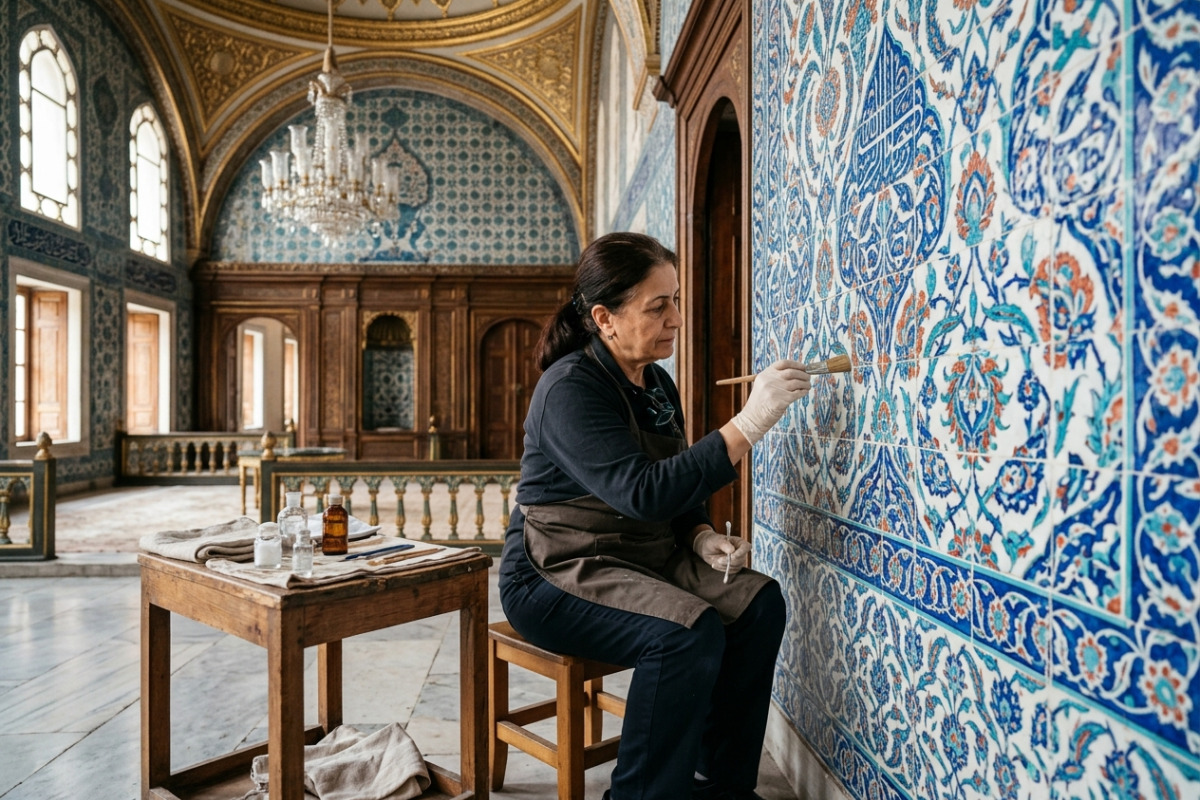
Topkapi Palace at sunset offers one of the most enchanting and visually rewarding experiences in Istanbul. As the sun begins its descent over the Golden Horn and the Bosphorus, the sprawling complex of the Ottoman sultans undergoes a dramatic transformation. The white marble surfaces turn to honey, the intricate Iznik tiles glow with deep turquoise intensity, and the silhouettes of ancient cypress trees stretch across manicured courtyards. Whether you are a professional photographer or a traveler seeking a moment of serenity, understanding the nuances of light and logistics at this UNESCO World Heritage site is essential.
The Seasonal Challenge: Timing Your Visit Perfectly
One of the most critical aspects of planning a sunset visit to Topkapi Palace is understanding the discrepancy between museum operating hours and the actual time of sunset. This is a detail often overlooked by generic travel guides. During the peak summer months (June to August), the sun in Istanbul sets as late as 20:30. However, the palace typically closes its gates to visitors at 18:00 or 18:30. This means that during mid-summer, you will experience the 'Golden Hour'—the period of soft, warm light—but you will likely be escorted out before the sun actually dips below the horizon.
For those specifically seeking true sunset photography within the palace walls, the winter and late autumn months (November through February) are the ideal times to visit. During this period, sunset occurs between 17:30 and 18:30, aligning perfectly with the palace's closing hours. This allows photographers to capture the deep purples and oranges of the twilight sky against the Imperial architecture just before the museum closes.
The Fourth Courtyard: The Photographer’s Sanctuary
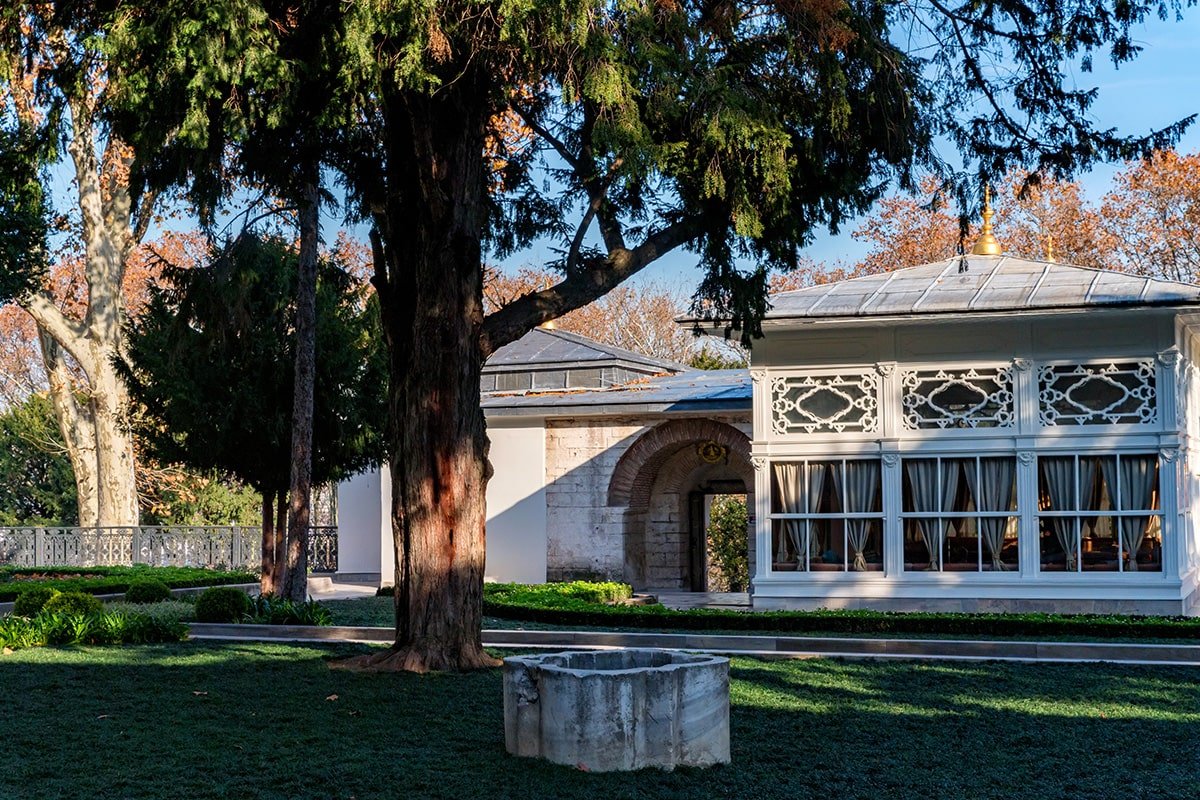
While the entire palace is majestic, the Fourth Courtyard (Sofa-i Hümayun) is the undisputed crown jewel for evening photography. This area was the private sanctuary of the Sultans and offers the most expansive views of the city and the sea.
- The Iftariye Baldachin (Iftariye Köşkü): This iconic gilded structure, built by Sultan Ibrahim, is perhaps the most photographed spot in the palace. At sunset, the gold-plated copper roof catches the last rays of light, creating a brilliant focal point. For the best shot, frame the baldachin against the distant silhouette of the Galata Tower across the Golden Horn.
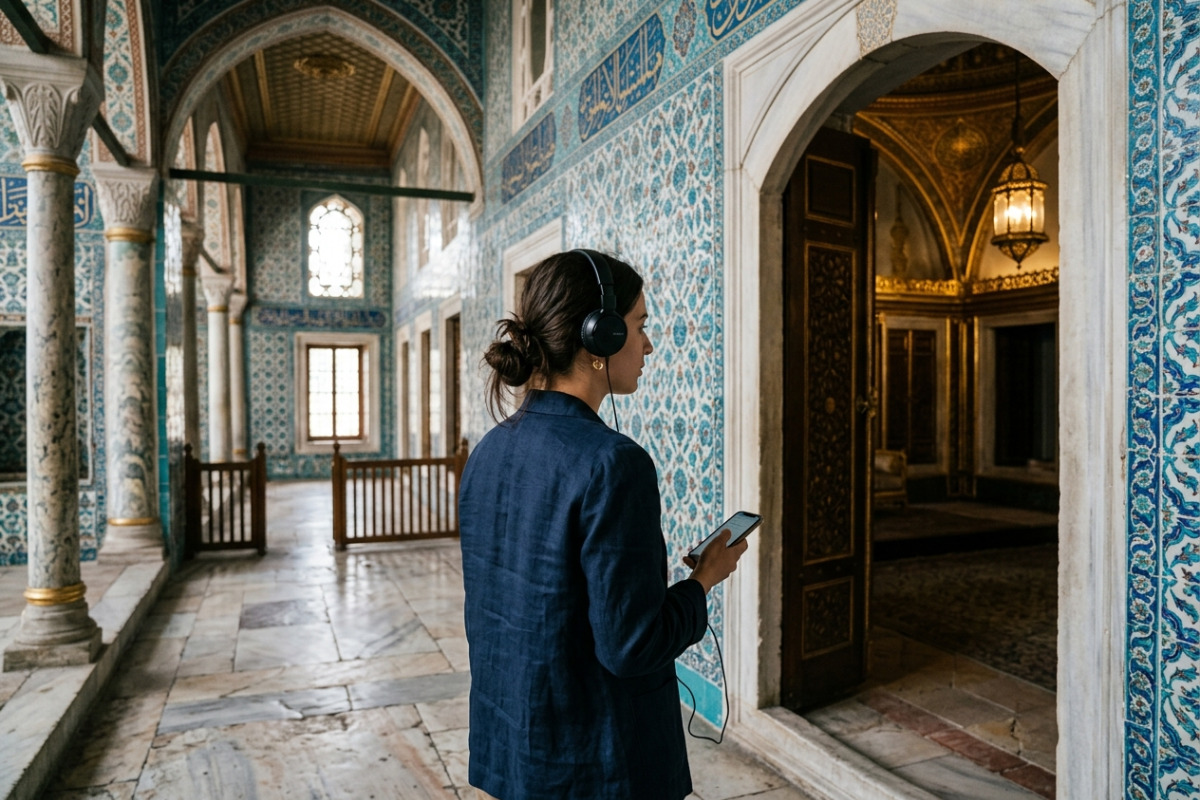
- The Baghdad Pavilion (Bağdat Köşkü): This masterpiece of 17th-century Ottoman architecture is covered in exquisite blue and white tiles. During the evening, the low-angle sun hits the marble exterior, creating a soft glow. The contrast between the warm sunlight and the cool blue tiles is a dream for color grading.
- The Terrace of the Mecidiye Kiosk: This offers a 180-degree panoramic view of the Bosphorus Bridge and the Asian side of Istanbul. As the city lights begin to flicker on, the blend of natural and artificial light provides a stunning depth to wide-angle landscape shots.
Technical Photography Tips for Low Light
Capturing the grandeur of Topkapi Palace requires more than just pointing and clicking. To elevate your images from snapshots to professional-grade captures, consider these technical adjustments:
- Mastering Marble Reflections: The marble floors of the Fourth Courtyard can act as a mirror after a light rain or when cleaned. Lower your tripod to ground level and use a narrow aperture (f/8 to f/11) to capture the reflection of the sunset-lit pavilions in the stone.
- ISO and Exposure: To maintain the 'Expertise' (E-E-A-T) in your shots, keep your ISO as low as possible (ISO 100-400) to avoid digital noise in the darkening sky. If you don't have a tripod, use the marble railings to steady your camera and increase your shutter speed slightly.
- White Balance: Set your white balance to 'Cloudy' or 'Shade' to enhance the warm, golden tones of the sunset. This prevents the camera's auto-mode from over-compensating and turning the golden light into a sterile white.
- Dynamic Range: The contrast between the bright sky and the shaded corridors of the palace can be extreme. Shoot in RAW format to ensure you can recover details in the shadows of the arched walkways without blowing out the highlights of the sky.
The Atmosphere: A Journey Through Time
Beyond the technicalities of photography, the evening atmosphere at Topkapi Palace is a sensory experience. As the day-trip crowds dissipate, the palace regains its regal silence. The sound of the Adhan (call to prayer) echoing from the nearby Hagia Sophia and the Blue Mosque creates a hauntingly beautiful soundtrack to the visual feast.
The Second Courtyard, home to the Palace Kitchens and the Imperial Council Chamber, takes on a different character. The long shadows of the towering cypress trees create a sense of mystery, reminding visitors of the centuries of intrigue that once took place within these walls. This is the time to put the camera down for a moment and simply breathe in the history of the Ottoman Empire.
Logistical Advice for the Evening Visitor
To ensure you don't spend your golden hour standing in a ticket line, follow these essential planning tips:
- Purchase Tickets in Advance: Use the official online portal to buy your tickets. This allows you to bypass the often-lengthy queues at the entrance.
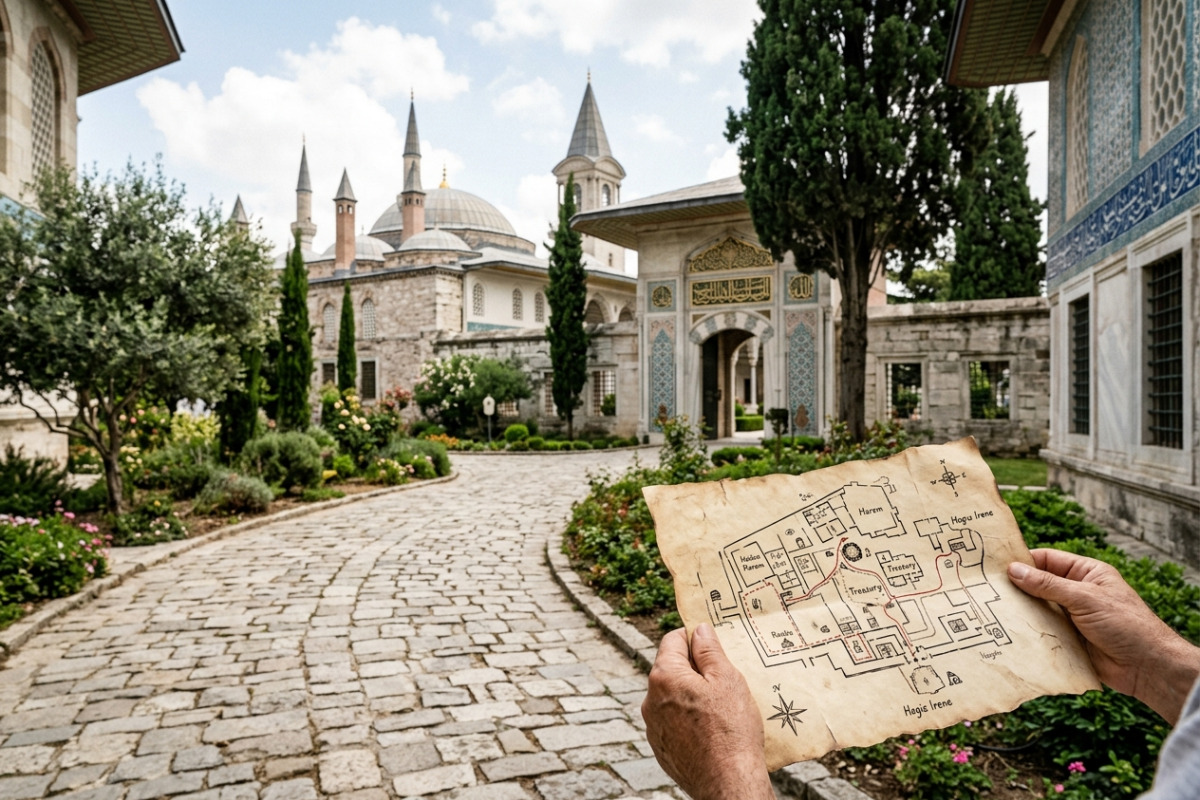
- Start from the Back: Most visitors start at the First Courtyard and work their way in. If your goal is sunset photography, head straight to the Fourth Courtyard upon arrival (around 15:30 or 16:00) and work your way backward toward the exit as the light changes.
- The Harem Timing: Note that the Harem section often closes 30 minutes earlier than the main palace grounds. If you wish to see the Harem, do so early in the afternoon before settling into your sunset photography spots.
- Security Restrictions: Professional tripods are sometimes restricted or require a permit. A compact, 'gorilla-pod' style stabilizer is often a safer and more mobile bet for the casual but serious photographer.
Conclusion: The Golden Legacy
Visiting Topkapi Palace at sunset is an exercise in timing, patience, and appreciation for classical beauty. It is the hour when the architectural genius of the Ottoman era is most visible, highlighted by the natural theater of the Istanbul sky. By understanding the seasonal shifts in light and the specific technical requirements of the environment, you can capture images that reflect the true majesty of this historic landmark. Whether you leave with a memory card full of masterpieces or simply a heart full of wonder, the sunset over the Seraglio Point is an experience that stays with you long after the palace gates have closed.