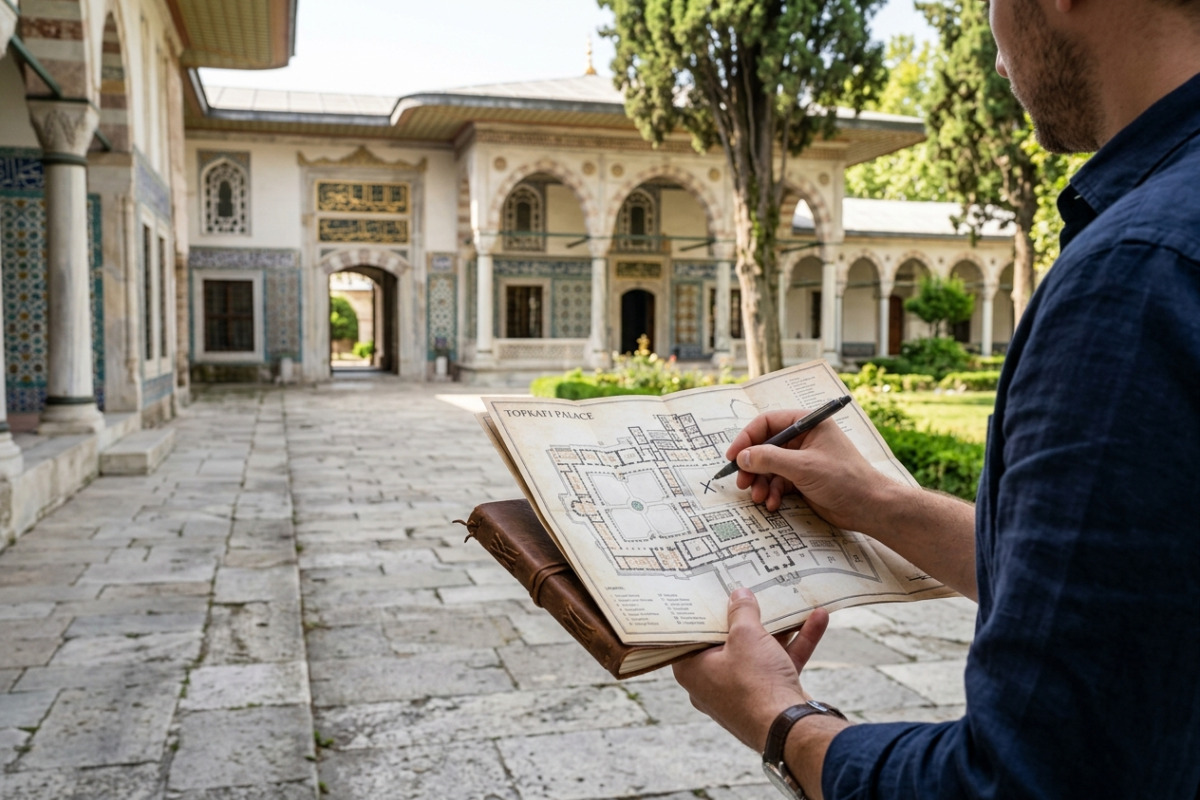
You want a meaningful visit to Topkapi Palace, not just a blur of rooms and selfies. These Topkapi Palace visit tips help you choose a theme-driven route that fits the time you have and the stories you want to take away. Pick one theme and follow the suggested stops to turn fragments into a coherent experience.
Why choose a theme for your visit
Topkapi Palace houses vast collections spanning statecraft, daily life, religion and leisure. When you adopt a single lens—such as power or domestic life—you give your brain a narrative to follow, which makes details stick and helps avoid decision fatigue. A theme also reduces walking and backtracking because you prioritize a specific set of rooms and objects.
These themed routes work whether you have 60 minutes or a half day. I recommend booking your tickets in advance so you can focus on the experience instead of waiting in line. If you plan to visit the Harem, remember it is a separate section within the complex and requires extra walking, so factor that into shorter themes.
Topkapi Palace visit tips: pick the right theme for you
Choose a theme that matches your interests and energy level. Below are four practical mini-routes—each includes the must-see stops, what to look for, and pacing notes. Use a single theme as your whole visit or combine two if you have more time.
1) Power & Ceremony: How sultans projected authority
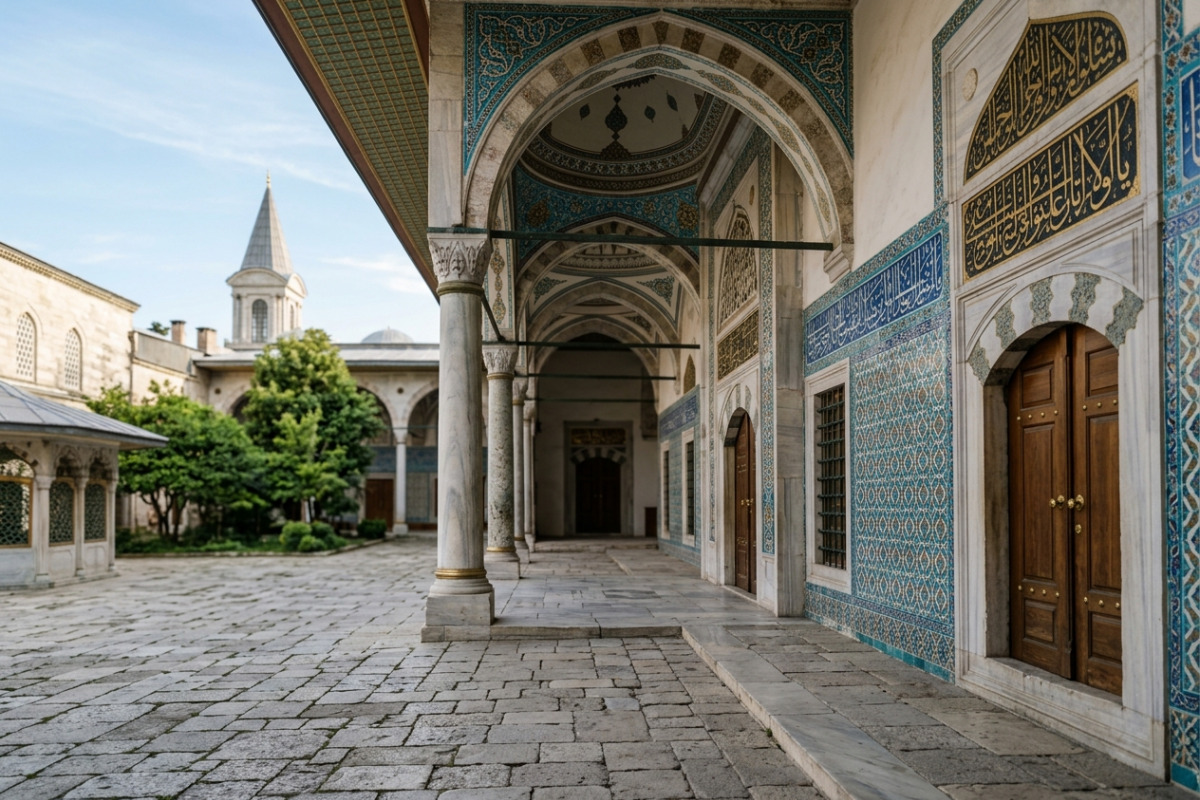
Focus on the symbolic spaces of governance and ritual. Start at the public-facing courtyards and move toward the Divan and the ceremonial rooms. The Divan and treasury pieces anchor this route: observe how objects and spatial layout reinforced hierarchy, from throne niches to sword displays.
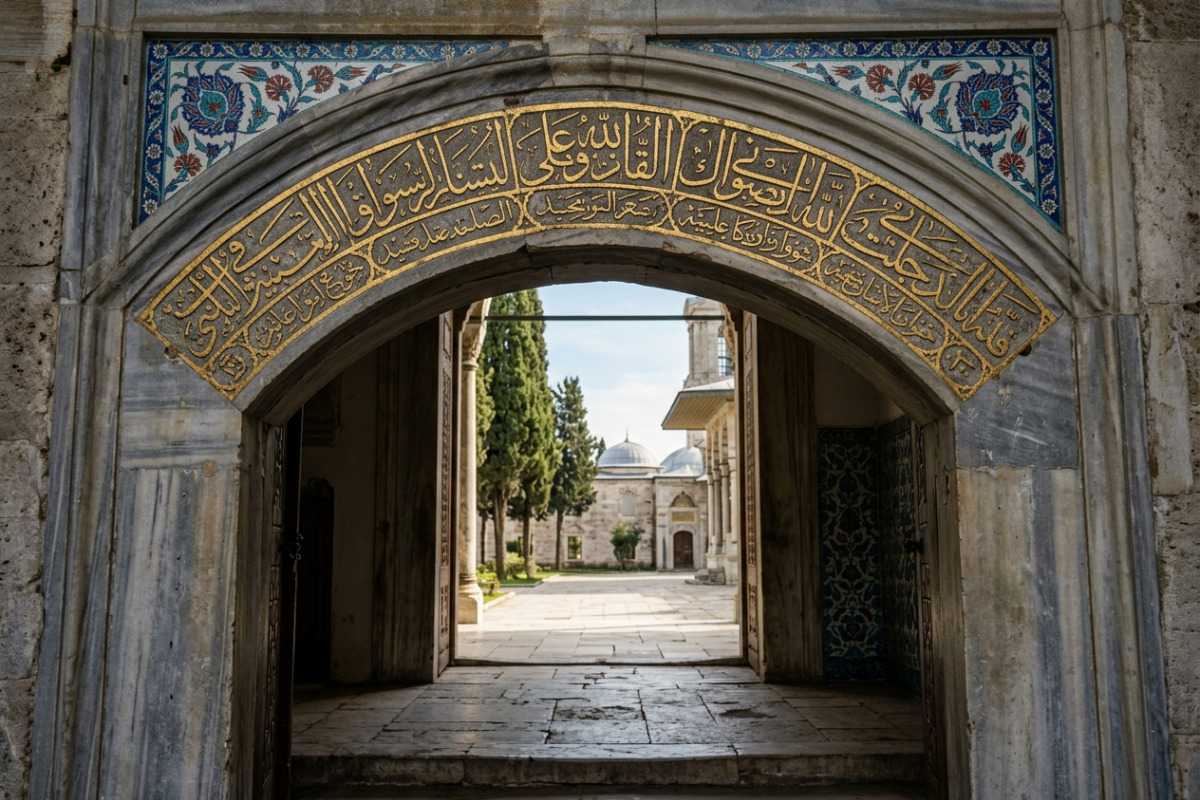
Look closely at inscriptions, seal impressions and gift diplomacy items; small differences in calligraphy or precious materials reveal political relationships. Pace yourself by lingering where the sunlight highlights inlaid work—those are often the spots curators chose to display prestige items.
2) Domestic Life: The palace behind closed doors
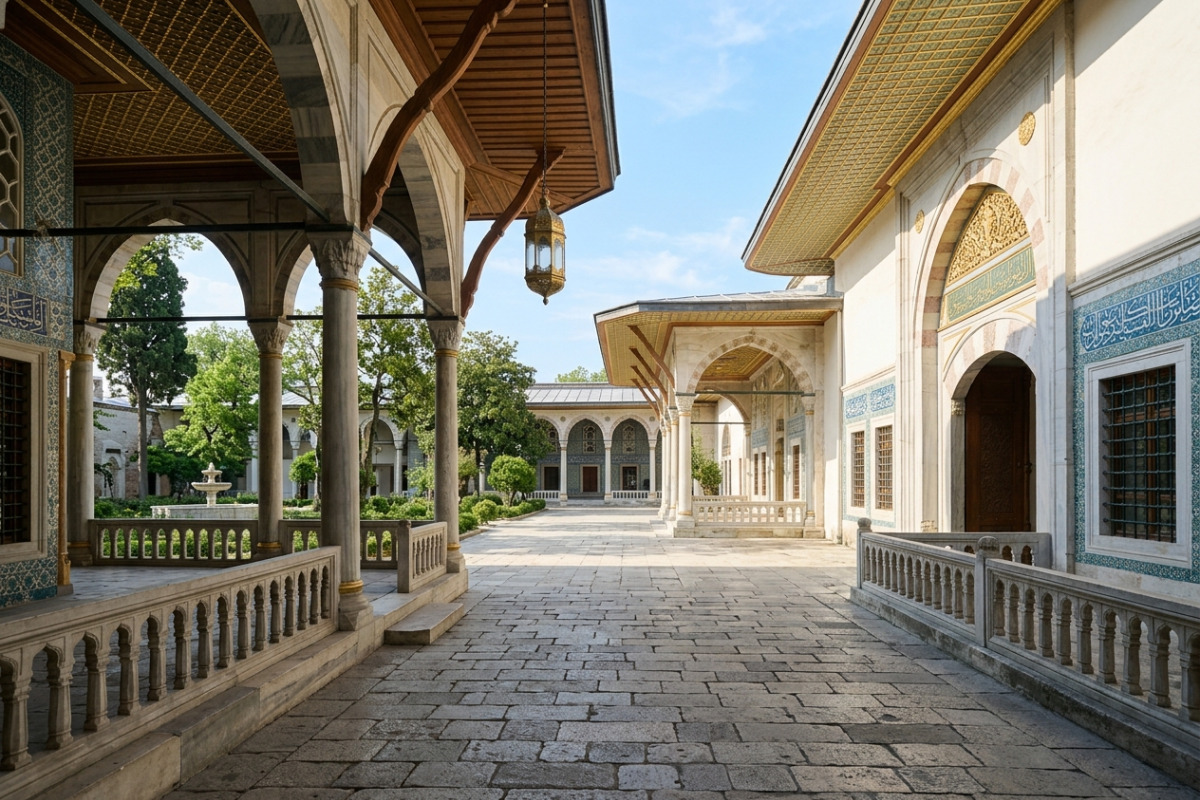
This theme uncovers kitchens, living quarters and service spaces to understand daily rhythms. Begin in the Imperial Kitchen where scale and organization tell you how thousands were fed. From there, move through service corridors toward the Harem and private chambers where staff and family life unfolded.
Pay attention to mundane objects—keys, bowls, hooks—and to appliance placement. These details reveal labor divisions and the infrastructure of palace life. If you enjoy tactile stories, this route rewards patience; small, everyday items often capture social history better than big splendors.
3) Spiritual & Scholarly: Faith, libraries and devotion
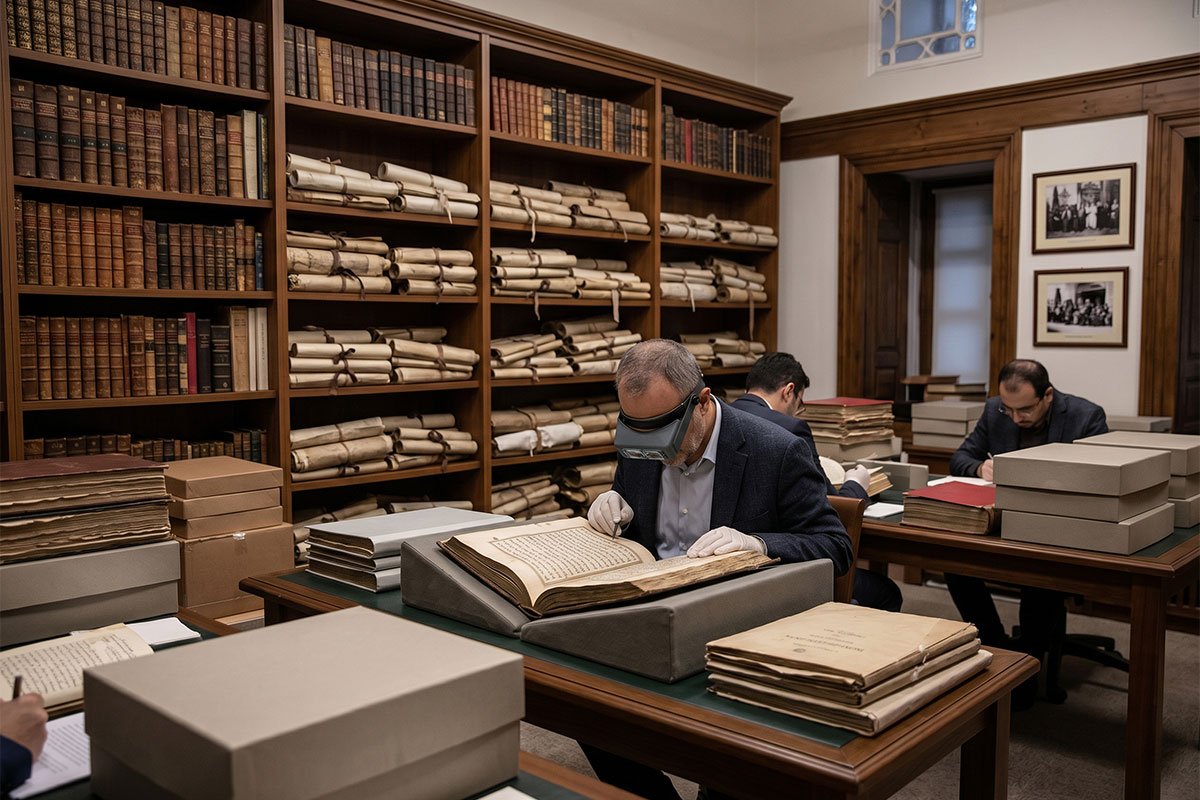
Topkapi was a center of learning and piety as much as power. Center your route on libraries, mosques, and the relic displays to trace how religion underpinned Ottoman rulership. The palace’s manuscript collections and calligraphic pieces show the intellectual life that supported statecraft.
Spend time reading labels for dates and donors; many religious objects were endowments that link the palace to broader Ottoman society. Quiet corners and smaller galleries are ideal for absorbing inscriptions and marginalia, so slow your pace and let the details speak.
4) Senses & Gardens: Leisure, vistas and material culture
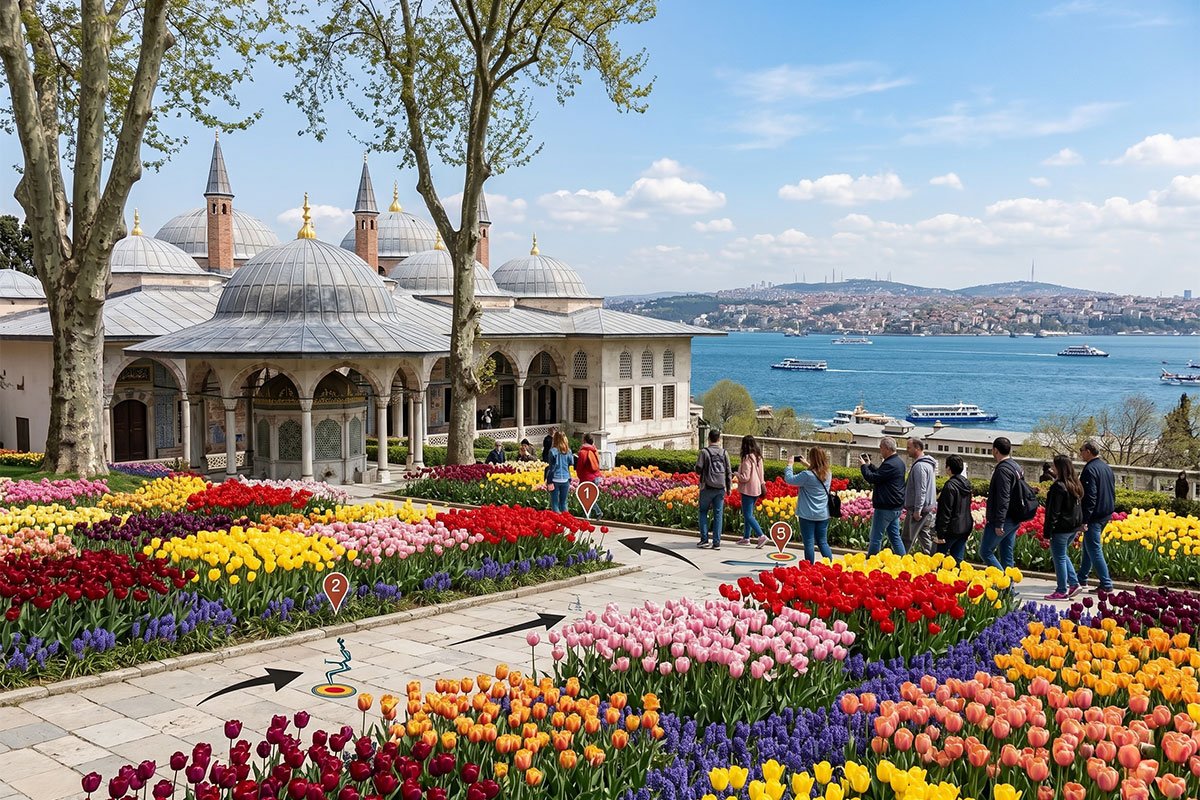
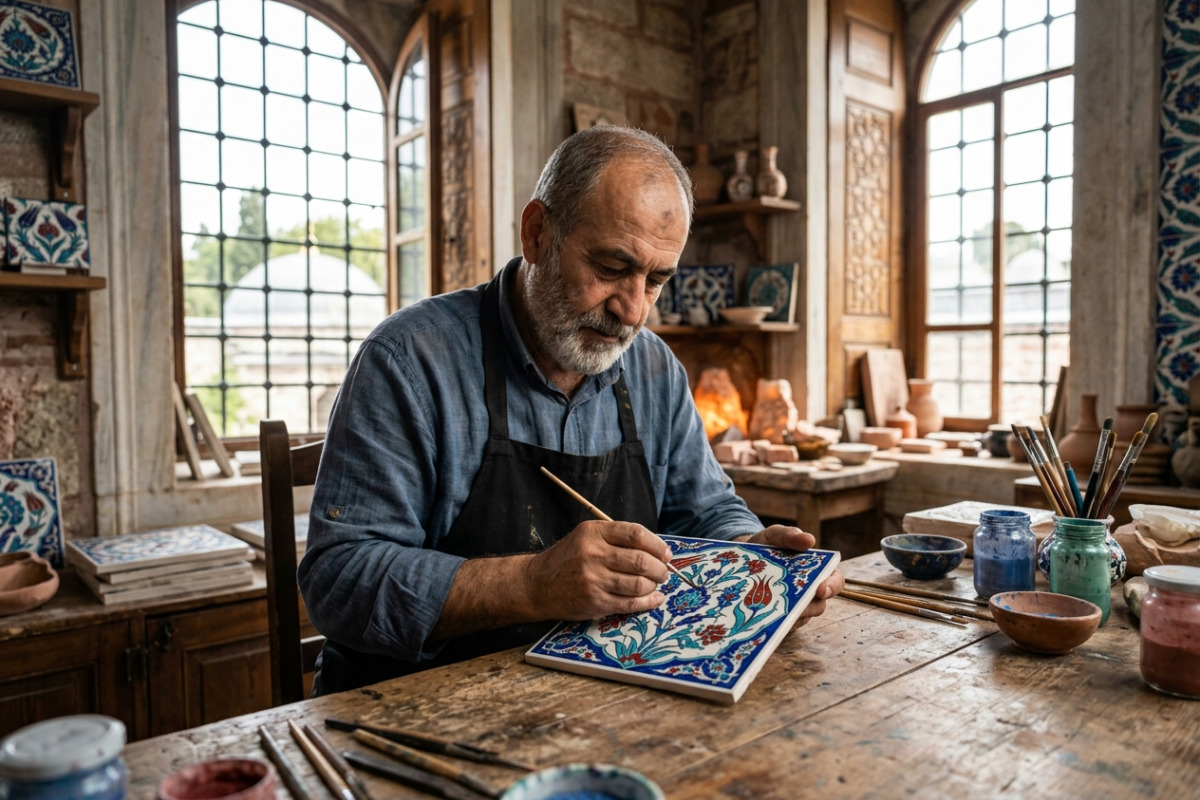
This lighter route blends the palace’s outdoor pleasures with textured interiors. Start in the Gardens to enjoy views over the Bosphorus, then move to rooms that display textiles, ceramics and everyday objects connected to leisure. The contrast between shaded courtyards and cool interior spaces tells a story of seasonal comfort and design choices.
Use this theme when you want a relaxed visit with frequent stops for photos, notes, or sketching. Benches in the courtyards are perfect for short rests; treat them as built-in pauses that structure your visit and help you notice scents, light and sound.
Pacing, practical tips and mobility-friendly choices
Regardless of theme, plan for at least one extended pause every 30–45 minutes. Carry a small bottle of water, comfortable shoes, and a pocket notebook if you like jotting observations. Buy your tickets ahead to secure a morning or late-afternoon slot that suits your energy. For details on opening times, entry rules and visitor services, consult the visiting information or FAQ page before you go.
If you have mobility limitations or prefer audio narration, consider the official audio guide to enrich your theme with curated commentary without constant label-reading. When the Harem is part of your route, allow extra time for stairs and narrower passages.
How to wrap up your themed visit and turn it into a lasting memory
At the end of your visit, pick one object or view that encapsulates your theme and spend five minutes with it—describe it aloud or write a short note. This micro-reflection helps cement the storyline you chose, turning a sequence of rooms into a coherent narrative you can retell later.
Before you leave, use the palace shop to find a small reproducible item related to your theme—prints for the artistic route, a book for the scholarly route, or a culinary-themed memento for the domestic route. And when you’re planning your next visit, decide whether to rotate themes over multiple trips; Topkapi rewards repeat visits with new layers of meaning.
Plan now: book tickets and choose your story
Choose a theme, reserve your tickets, and use the palace’s visiting information to time your route. A focused approach transforms the palace from a checklist into a curated museum experience—one that you’ll remember long after the visit ends.