Winter transforms Topkapi Palace from a bustling historical monument into a dreamlike scene defined by soft morning light, gentle fog rising from the Bosphorus, and ethereal reflections shimmering on the ancient marble courtyards. For professional and hobbyist photographers alike, this season offers an entirely different emotional palette than the harsh, bright summer months. Winter brings depth, texture, and a sense of solitude that allows for cinematic storytelling through the lens.
The Science of Winter Light: Golden Hour and Blue Hour
In Istanbul, the low winter sun never reaches the zenith, meaning it casts a golden, angled glow throughout the day. This is a gift for architectural photography, as it highlights the intricate textures of the Ottoman stonework and the curves of the palace domes without creating blown-out highlights. To maximize this, photographers should aim for two specific windows:
- The Golden Hour (08:30–10:00 AM & 15:30–16:30 PM): During these times, the light is warm and directional. Set your White Balance to 'Cloudy' or 'Shade' to enhance the golden tones. Use an aperture of f/8 to f/11 for wide courtyard shots to ensure sharpness from the foreground tiles to the distant minarets.
- The Blue Hour: Just before the palace closes, the winter sky turns a deep indigo. This provides a stunning contrast against the warm interior lights of the pavilions. A tripod is technically restricted in many areas, so utilize a fast prime lens (f/1.4 or f/1.8) or rely on high-performance Image Stabilization (IS).
Mastering the Mist: Bosphorus Views from the Fourth Courtyard
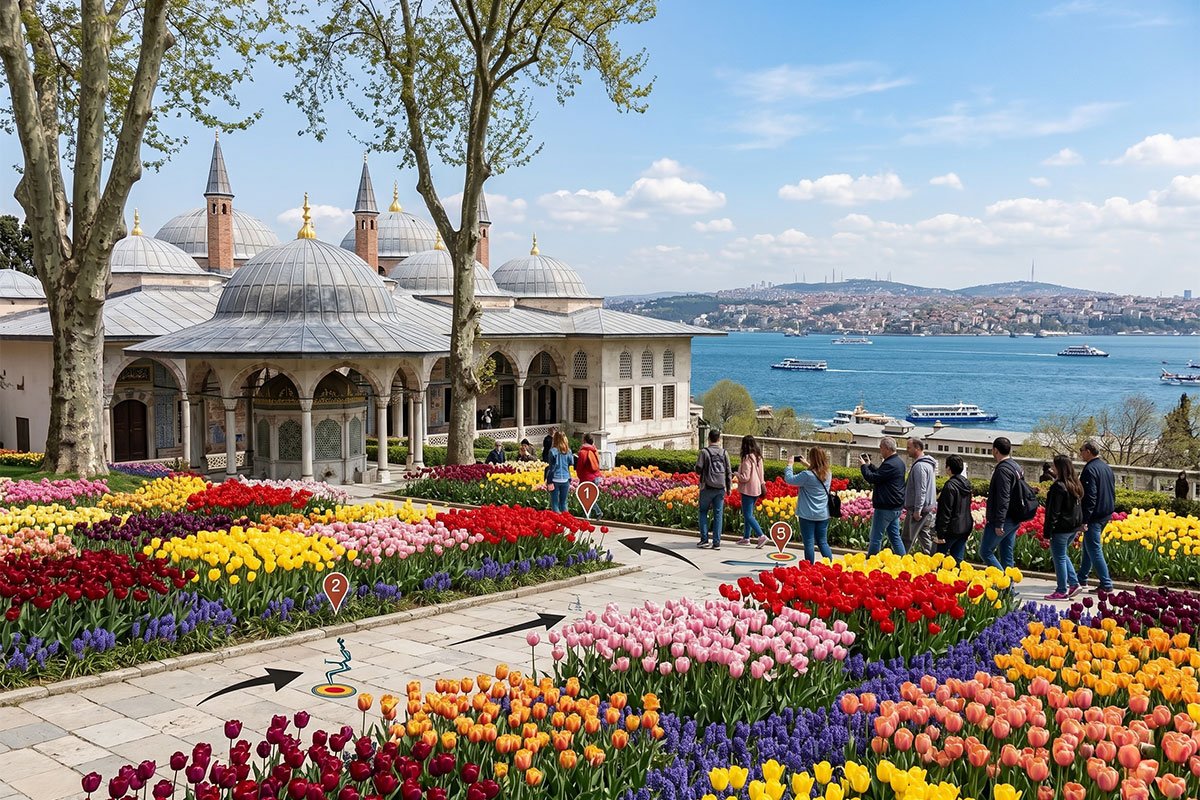
The palace terraces, particularly the area surrounding the Baghdad Pavilion and the Iftariye Baldachin, offer the most atmospheric winter vistas in the city. On cold mornings, a thick layer of sea mist often rolls in from the Marmara Sea, partially obscuring the Galata Tower and the Bosphorus Bridge. This creates a natural 'high-key' effect.
Technical Tip: When shooting in fog, your camera’s light meter may underexpose the image, thinking the white mist is too bright. Increase your Exposure Compensation by +0.7 or +1.0 to keep the whites crisp. To capture the silhouettes of seagulls or distant ferries through the mist, use a telephoto lens (70-200mm) to compress the layers of the landscape, making the fog appear denser and more dramatic.
Interior Photography: The Harem and Imperial Halls
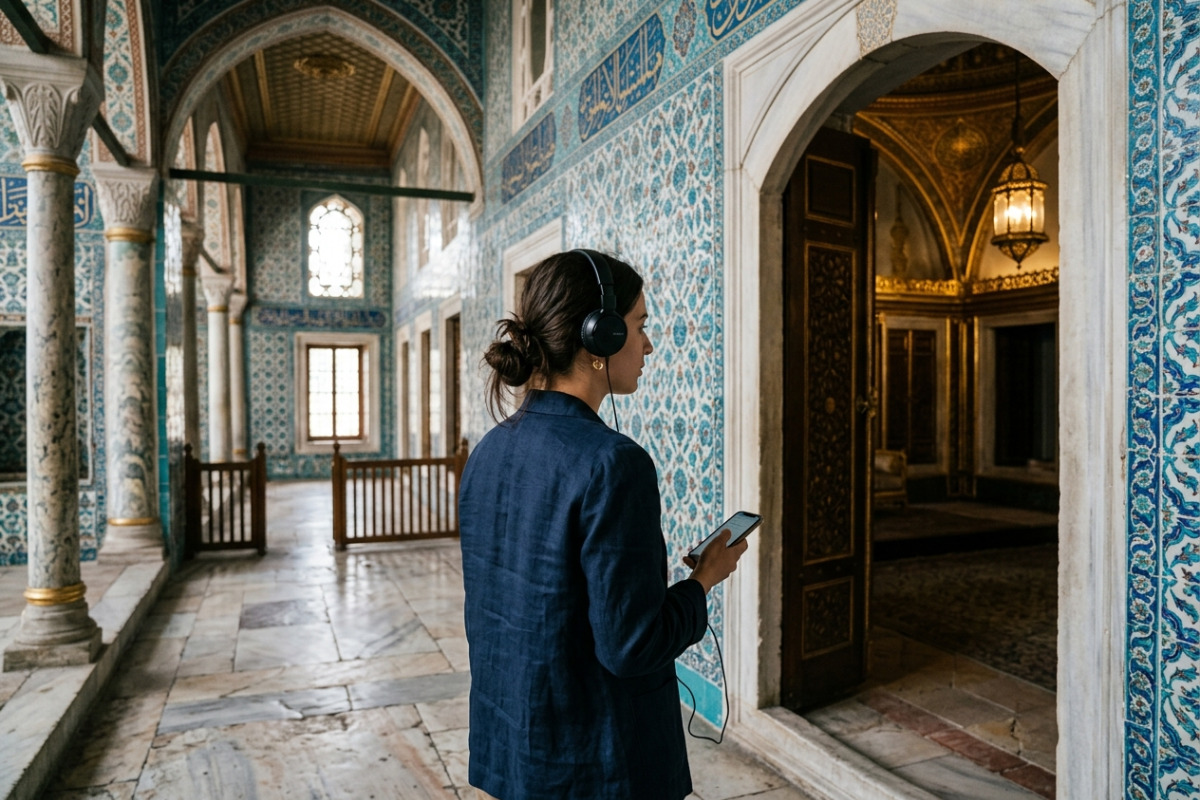
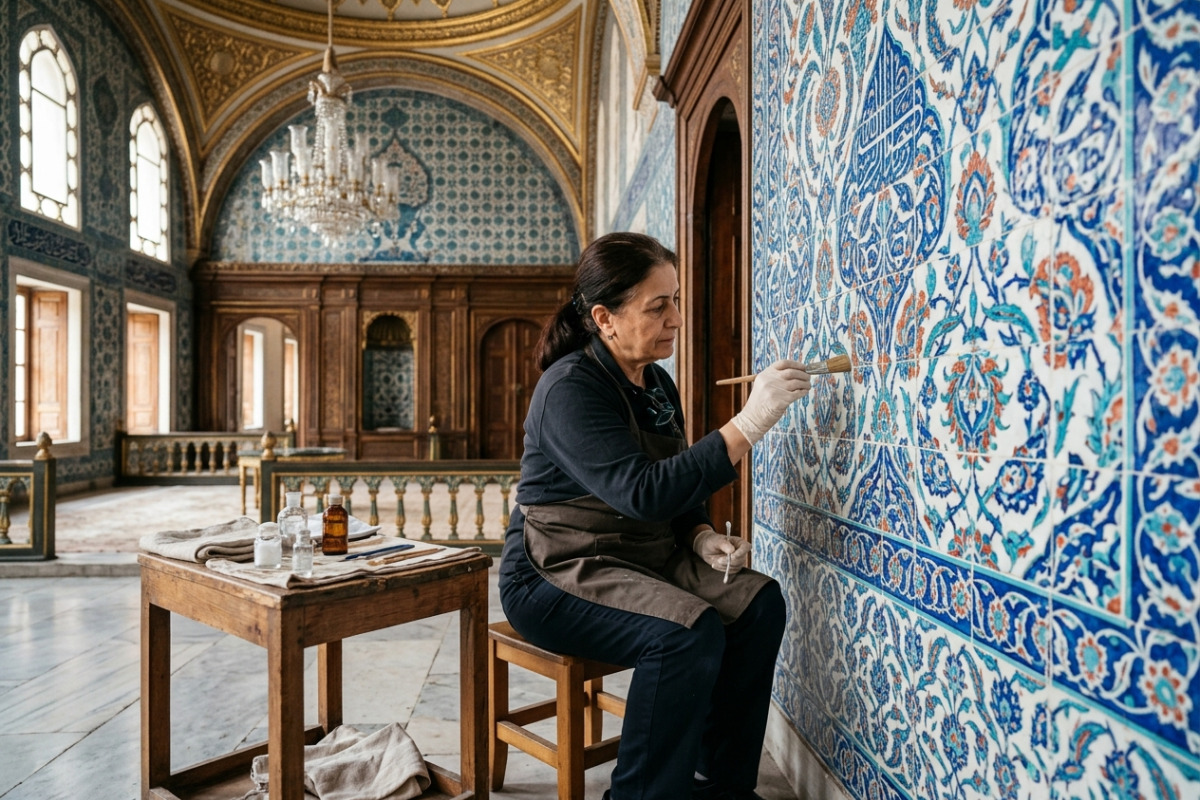
The interiors of Topkapi Palace present a different challenge: low light and high contrast. The Harem and the Library of Ahmed III feature exquisite Iznik tiles and stained glass that glow when hit by diffused winter sunlight. Since flash photography is strictly prohibited, you must master your ISO settings.
Modern mirrorless and DSLR cameras can easily handle ISO 1600 to 3200 without significant noise. If you are shooting the polished marble floors to capture reflections of the golden domes, use a wide-angle lens (16-35mm) and lean against a pillar to stabilize your shot. Focus on the 'leading lines' created by the arched corridors to draw the viewer’s eye into the frame. For the tiles, use a 'Macro' setting or a lens with a short focusing distance to capture the crazing (fine cracks) in the glaze, which adds a sense of history and age to your portfolio.
Essential Gear and Technical Precautions
Photographing in Istanbul during winter requires specific preparation for both the artist and the equipment:
- Lens Choice: A 24-70mm f/2.8 is the workhorse for Topkapi. It allows you to pivot from wide architectural shots in the Second Courtyard to intimate detail shots of the Sultan’s thrones.
- Circular Polarizer (CPL): Essential for cutting glare on wet marble surfaces after a winter rain and for deepening the blue of the sky behind the white chimneys of the palace kitchens.
- Condensation Management: Moving from the cold courtyards into the heated Treasury or Harem can cause your lens to fog up instantly. Keep a microfiber cloth handy, and if possible, keep your camera in a sealed bag for 10 minutes when entering a warmer zone to let it acclimate.
- Battery Life: Cold weather drains lithium-ion batteries significantly faster. Carry at least two spares in an inner pocket close to your body heat.
Capturing the 'Rainy Day' Aesthetic
Don’t put your camera away if it starts to drizzle. The marble courtyards of Topkapi Palace, especially the Court of the Queen Mother, become giant mirrors when wet. This is the perfect time for 'puddle photography.' Get your lens as close to the ground as possible to capture a perfect symmetrical reflection of the Ottoman arches. Set your shutter speed to at least 1/250s if you want to freeze falling raindrops against the dark stone backgrounds.
Compositional Strategy: Solitude and Scale
One of the greatest advantages of winter is the reduced crowd size. Use this to capture the 'Solitude of the Sultan.' Look for frames where a single figure—perhaps a guard or a lone visitor—is dwarfed by the massive gates (like the Bab-üs Selam). This scale emphasizes the power and grandiosity of the architecture. Use the 'Rule of Thirds' to place the architectural focal point, but don't be afraid of 'Central Symmetry' when photographing the interiors of the domes, which were designed to be perfectly balanced.
Conclusion: The Photographer’s Reward
Winter photography at Topkapi Palace is not about capturing the perfect postcard; it is about capturing a mood. The interplay of cold stone and warm history, the silver Bosphorus mist, and the quiet dignity of the courtyards provide a canvas that summer simply cannot match. By mastering your low-light settings and embracing the atmospheric weather, you will leave with a collection of images that feel cinematic, soulful, and uniquely Istanbul. Whether it’s the glint of gold in the Harem or the silhouette of a minaret against a winter sunset, Topkapi in the cold is a masterpiece waiting to be framed.