If you love photographing historic sites, Topkapi Palace photography rewards careful planning as much as good gear. You’ll encounter low light, crowded courtyards, and tiny decorative details that demand different techniques; this guide helps you plan a visit that prioritizes both great images and respect for the site.
Plan your visit with photography in mind
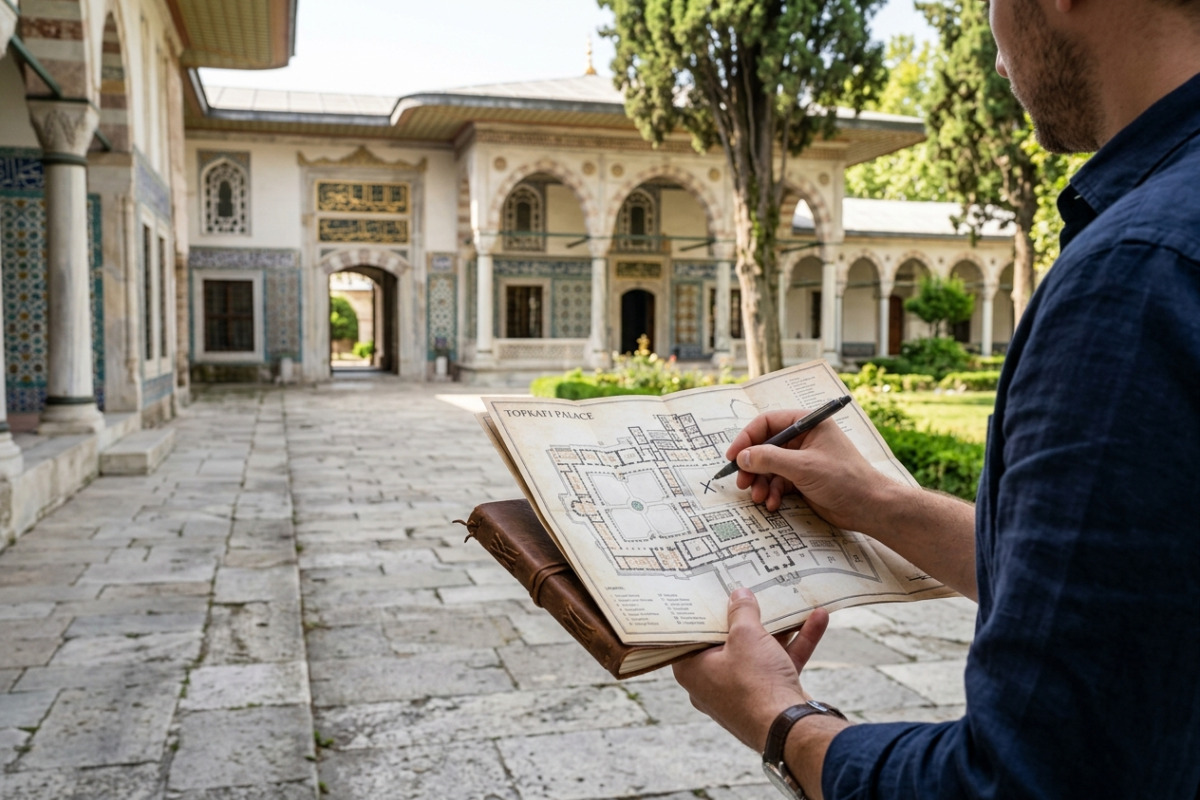
Before you arrive, pick a day and time that matches the shots you want. Mornings tend to be quieter in many galleries, while late afternoon can give warmer light in the palace gardens and over the Bosphorus-facing pavilions. Remember that popular areas such as the Harem or the Divan-ı Hümayun draw crowds, so budgeting time for each space will help you avoid rushed shots.
Buy your entry in advance to reduce queue time and secure access on busy days: Topkapi Palace tickets. Also check the official visiting information page for current rules about photography, permitted equipment, and opening times, since policies change seasonally.
Topkapi Palace photography: choosing the right gear
You don’t need the most expensive camera to take memorable photos here, but selecting the right tool will make low-light interiors and ornate details easier to capture. Consider a compact mirrorless camera with a fast prime lens (f/1.8–2.8) or a smartphone with a good night mode for flexibility.
If you prefer lightweight travel, a stabilized smartphone plus a small clip-on lens can handle many scenes. For more control, bring a lightweight mirrorless body and a 24-70mm zoom to cover courtyards and tighter interiors like the Palace Kitchens. Pack spare batteries and a small microfiber cloth for delicate surfaces.
| Type | Best for | Pros | Cons |
|---|---|---|---|
| Smartphone | Quick shots, low baggage | Convenient, good night modes | Limited zoom, smaller sensor |
| Mirrorless | Low light and detail | Lightweight, interchangeable lenses | More to carry |
| DSLR | Highest control | Excellent ISO and lenses | Bulky for long visits |
Techniques for interiors and understanding restrictions
Important Note: Photography is strictly prohibited inside the Imperial Treasury and the Sacred Relics section to protect the artifacts and maintain security. Focus your photography on the stunning architecture of the courtyards, the Harem corridors, and the exterior pavilions.
Many permitted rooms inside Topkapi have subdued light and glass cases. To maximize image quality, prioritize a higher ISO with careful noise control, a wide aperture for subject isolation, and steady hands. If you have to raise ISO, shoot RAW so you can recover shadows and color in post-production. Flash and tripods are generally not allowed inside any palace buildings.
- Shutter speed: Keep it fast enough for handheld shots; use in-body stabilization or support your elbows against a wall when possible.
- Aperture: Use wide apertures (f/1.8-2.8) for cropped details but stop down (f/5.6–8) for wide architectural shots in the courtyards.
- White balance: Interior lighting can be mixed; shooting RAW allows accurate correction later.
Working around glass cases and displays
When shooting permitted artifacts or display cases near the Harem corridors, avoid direct flash and position yourself to reduce glare. If a case is crowded, wait for a natural lull or step back and use a longer focal length to compress the scene without disturbing others. Getting your lens as close as possible to the glass (without touching it) can help eliminate reflections.
Composition: details, people, and the palace's scale
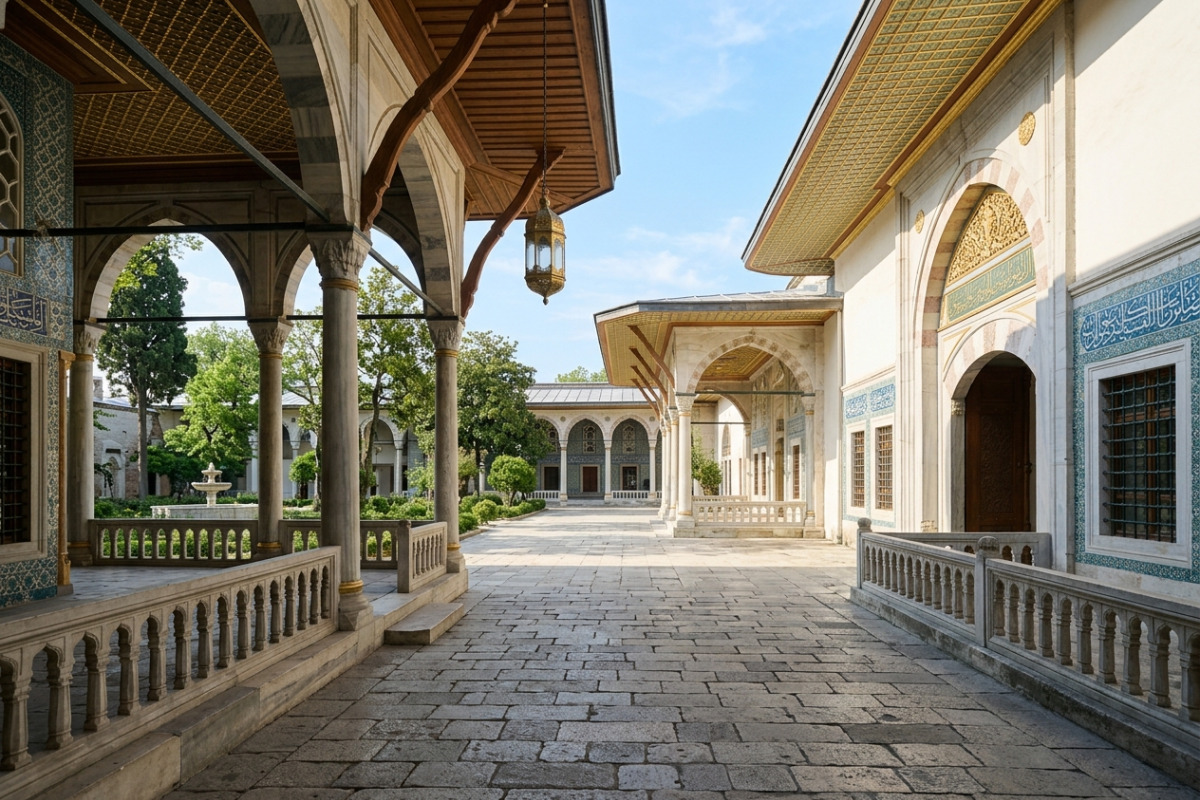
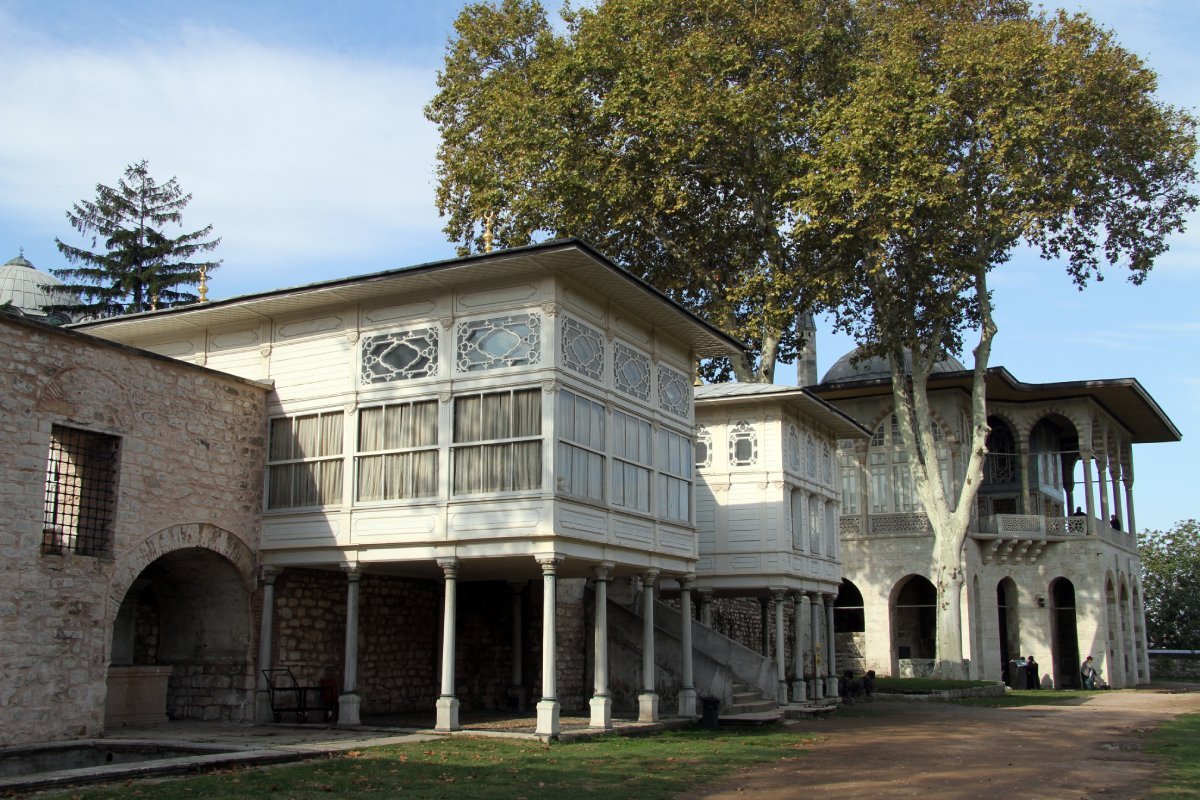
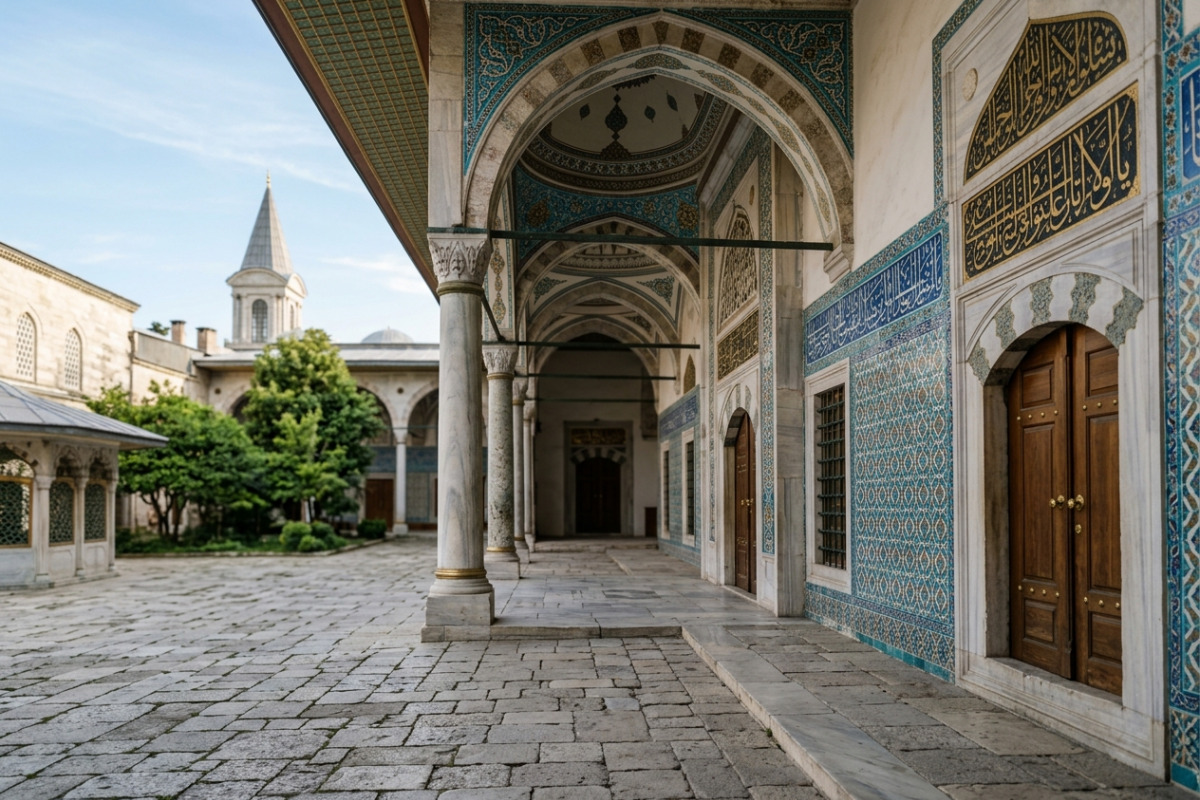
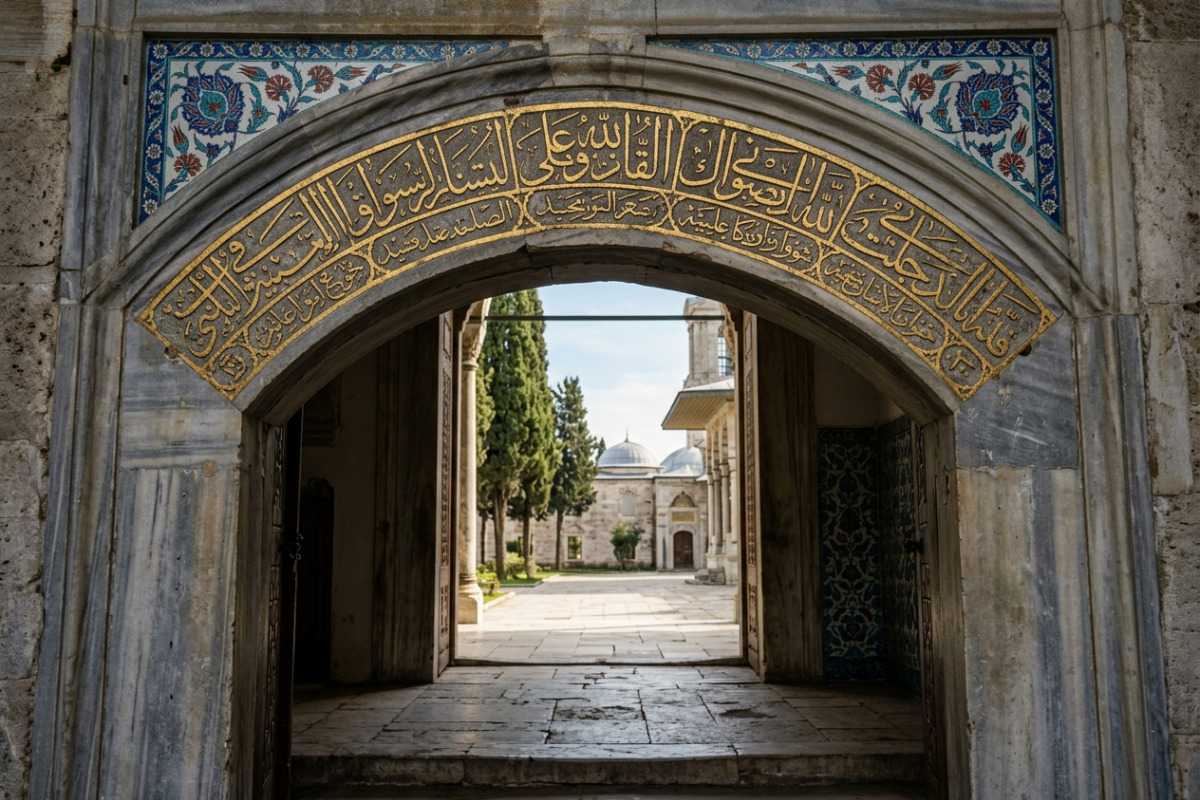
Topkapi rewards both micro and macro composition. Spend time isolating decorative details—calligraphy, tile patterns, and metalwork—and then contrast those with wide shots that show the palace’s rhythm of courtyards, gates, and domes. Alternating between close and wide perspectives creates a visually rich story of your visit.
Include people thoughtfully to convey scale and life, but be mindful of privacy and museum rules. Using silhouettes against bright courtyard light or candid shots while waiting in quieter corridors can add human context without drawing focus away from the architecture.
Framing and leading lines
Look for framing devices such as doorways, arches, and the lines of columns. These elements naturally lead the viewer’s eye to focal points like the Divan pavilion or a distant dome. For gardens and exteriors, use foreground elements—shrubbery or fountains—to anchor your composition and create depth.
Conservation-aware photography and practical etiquette
Respecting the palace’s treasures and other visitors is essential. Follow posted guidelines on tripods, flash, and touching surfaces, and always step aside to let others view displays. If you have questions about specific areas, check the FAQ or the visiting information first.
When sharing photos, credit the location and consider captioning images to highlight cultural context. If you want in-depth historical context while you shoot, the audio guide can enrich your images with stories about rooms and objects: Topkapi audio guide.
Summary and next steps
Topkapi Palace photography blends planning, the right kit, and sensitivity to place. Start by checking rules (especially the no-photo zones in the Treasury), buying Topkapi Palace tickets, and choosing a time that fits the shots you want. Pack light, favor stabilization, and alternate detail work with wide architectural frames to build a diverse photo story.
Ready to plan your shoot? Reserve your visit early and review the practical info so you can focus on making images that respect the palace’s history and beauty.