If you want to move beyond a checklist and truly absorb the stories inside Topkapi Palace, a Topkapi Palace audio tour can help you focus. By choosing a theme before you enter, pacing your time, and using a few practical audio strategies, you turn what could be an overwhelming museum visit into a calm, meaningful experience.
Pick a theme: Turn the palace into a single narrative
Decide what you want to remember after you leave: is it the daily life of the court, the material culture of the treasury, the culinary operations that supported the sultan’s table, or the intellectual life of the Divan? Selecting a theme gives your audio listening purpose and helps you filter the palace’s enormous visual and historical load.
When you commit to a thread—say, "kitchen and foodways" or "ceremonial power"—you’ll find yourself noticing details you’d otherwise miss. Use short segments of the audio to follow that thread from room to room, pausing the commentary when you want to examine objects, take photos, or compare displays. This approach also reduces fatigue: you spend longer with fewer topics rather than skimming everything.
Themed ideas to try
- Culinary life: Track utensils, world-famous Chinese porcelain, and the layout of the Kitchen to see how a palace fed thousands daily.
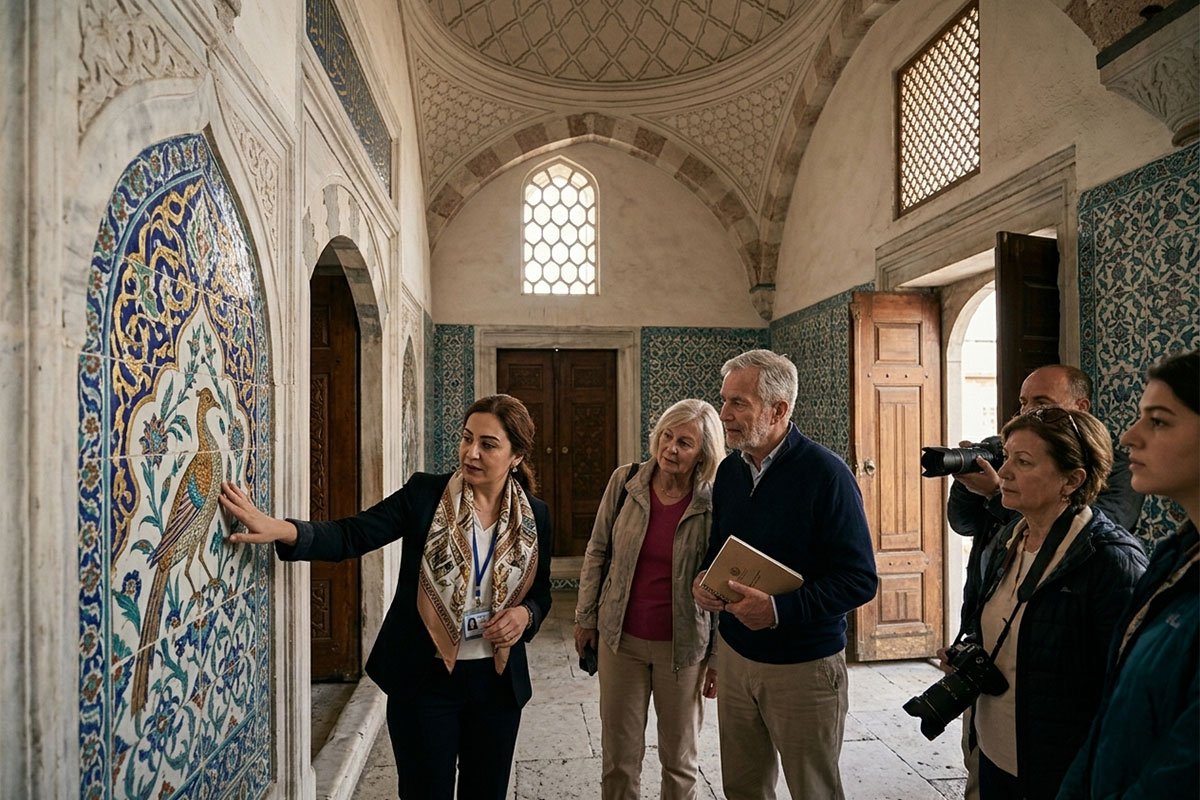
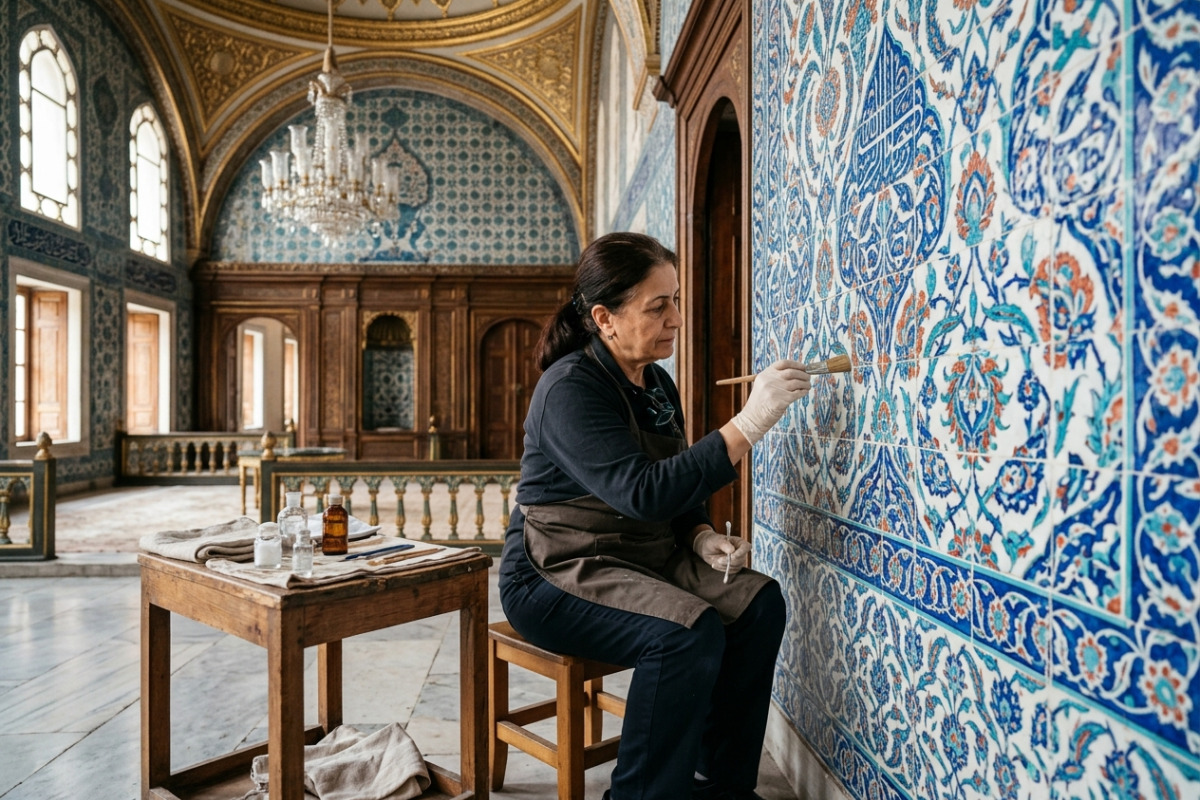
- Material culture: Follow the dazzling jewelry and golden artifacts in the Treasury, or examine the intricate tiles and calligraphy throughout the private pavilions.
- Power and protocol: Use the audio to learn rituals connected to the Divan (Imperial Council) and reception rooms.
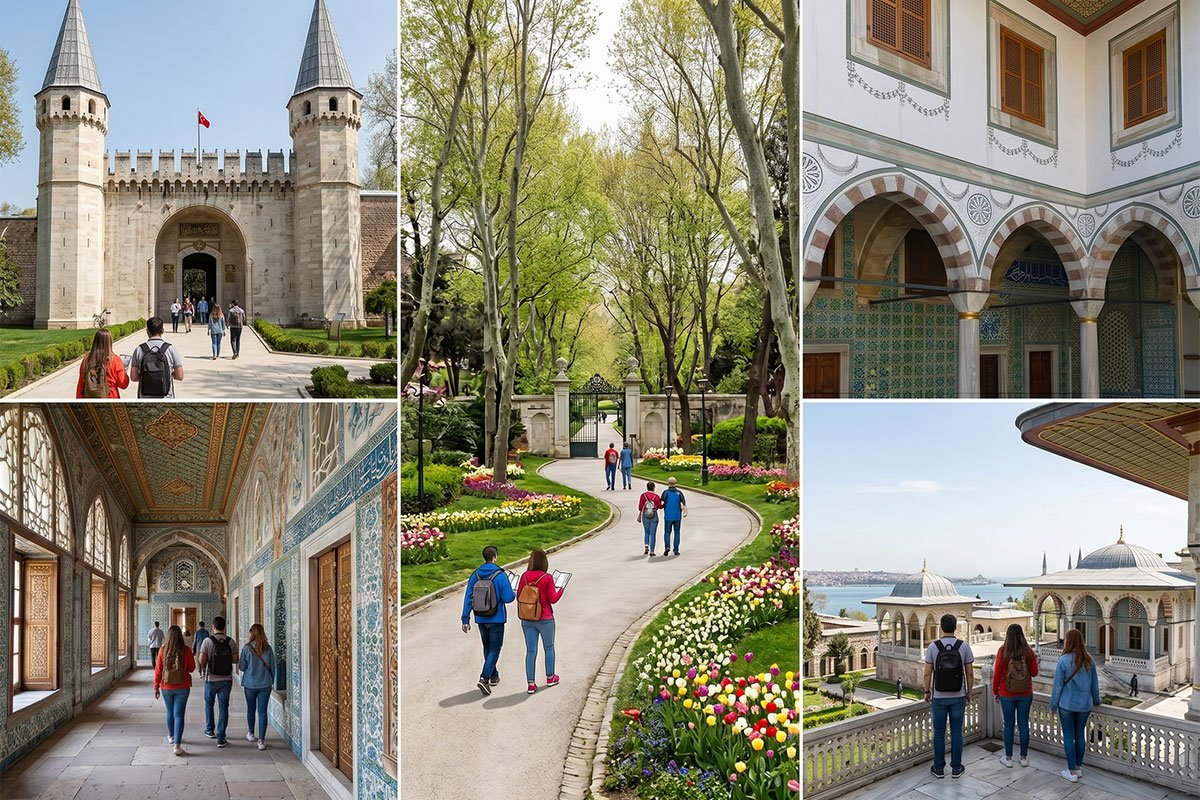
- Gardens and respite: Let the commentary highlight planting schemes and the role of the Gardens in courtly life, offering views of the Bosphorus.
Pick one theme and keep it in mind while you listen; the audio will suddenly feel curated to your interests rather than generic background narration.
Plan your route and pacing with audio in mind
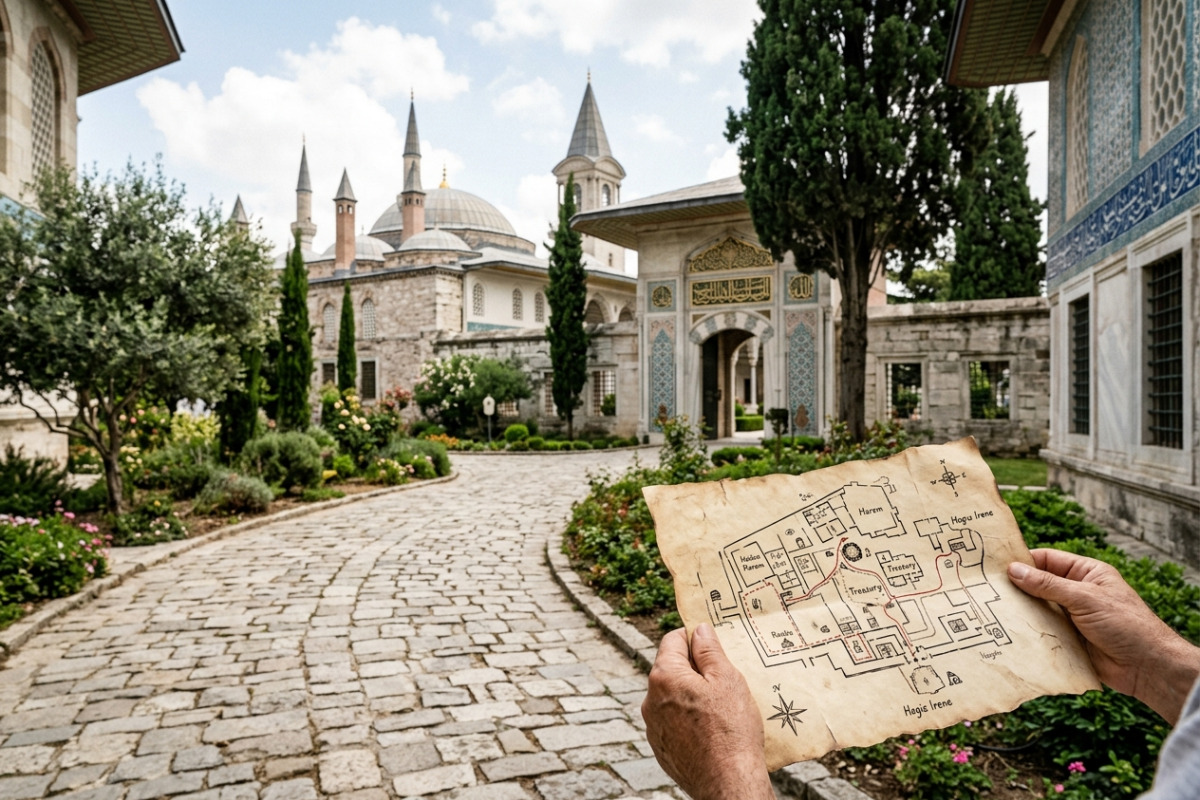
Before you arrive, roughly allocate time for each area connected to your theme. For example, if you choose a culinary thread, give the Kitchen and adjacent service areas more time and less to the sprawling courtyards. A good rule is to plan three "deep stations" of 20–30 minutes each, and two shorter stops of 10–15 minutes to maintain momentum.
Practical pacing also helps when some parts require separate tickets or queues. The Harem requires a specific ticket (often included in combined passes), so check the current requirements in the Visiting Information. Buying tickets in advance reduces waiting time and lets you stick to your audio-based schedule.
Sample timing blueprint
Start at an entrance point and aim for a two- to three-hour visit if you plan deep listening. Allow for slow walking between rooms, short breaks on benches in the gardens, and extra minutes at major displays like the Treasury. This pacing keeps the audio helpful rather than hurried, and gives you room to re-listen to key segments.
Audio logistics: gear, features, and note-taking
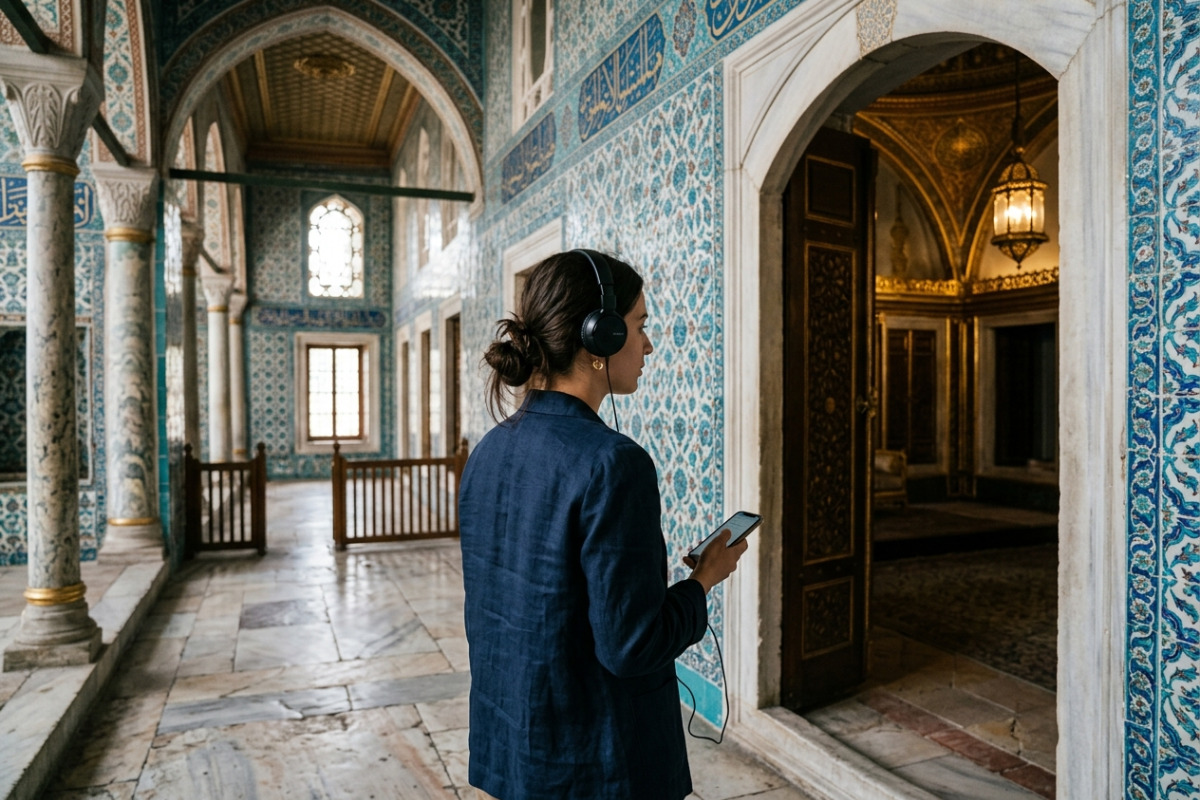
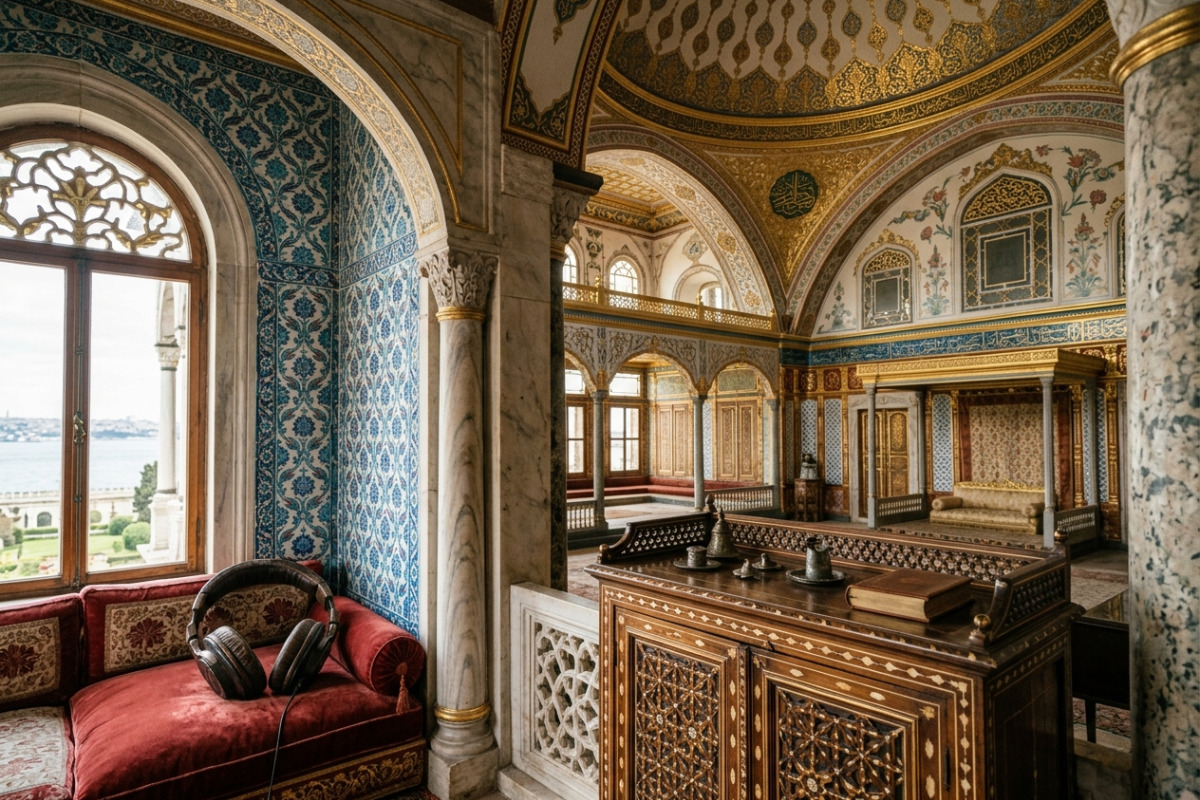
Good logistics matter. Use comfortable in-ear or on-ear headphones—noise-cancelling models are helpful in busy courtyards—and keep a power bank handy. If you’re using the official Audio Guide equipment rented at the entrance, ensure it is fully charged. If using a mobile app version, download any offline files before you arrive to avoid connectivity issues inside the thick stone walls.
Learn the navigation of your audio app or device: mark segments you want to return to, and note timestamps for specific objects. Some visitors use voice memos to jot short impressions of objects like the Spoonmaker's Diamond to look at more closely later. These quick notes turn a passive audio tour into an active learning session.
Sensory stops: where to pause, photograph, and reflect
An audio-tour approach is most powerful when combined with deliberate pauses. Choose three sensory stops—such as a shaded bench with a view over the Bosphorus, a richly tiled chamber in the Harem, and the treasury display—and spend extra time there. Use the audio to deepen your observation: when a narration mentions a motif or technique, look for it on nearby tiles, fabrics, or woodwork.
Respectful photography goes hand-in-hand with mindful listening. Keep flash off (as it is prohibited in many sections), avoid obstructing pathways, and step aside when someone else is listening. If you need quiet space to reread an audio segment, find a corner in the gardens or a small pavilion to settle for five to ten minutes.
Etiquette tip: Keep your audio volume at a level that doesn’t disturb others and pause playback when you step into small, crowded rooms to let fellow visitors experience the atmosphere.
Summary and practical next steps
Designing your own themed Topkapi Palace audio tour transforms a visit from a rushed walkthrough into an intentionally curated experience. Choose a theme, plan a pacing blueprint, prepare your audio gear, and pick sensory stops where you’ll slow down and reflect. These steps will make the palace’s layers of history far easier to retain.
Ready to try it? Purchase your entry in advance and secure a smoother experience by booking tickets before your trip. For details on opening hours, accessibility, and the latest visitor rules, consult the Visiting Information or the FAQ for quick answers.