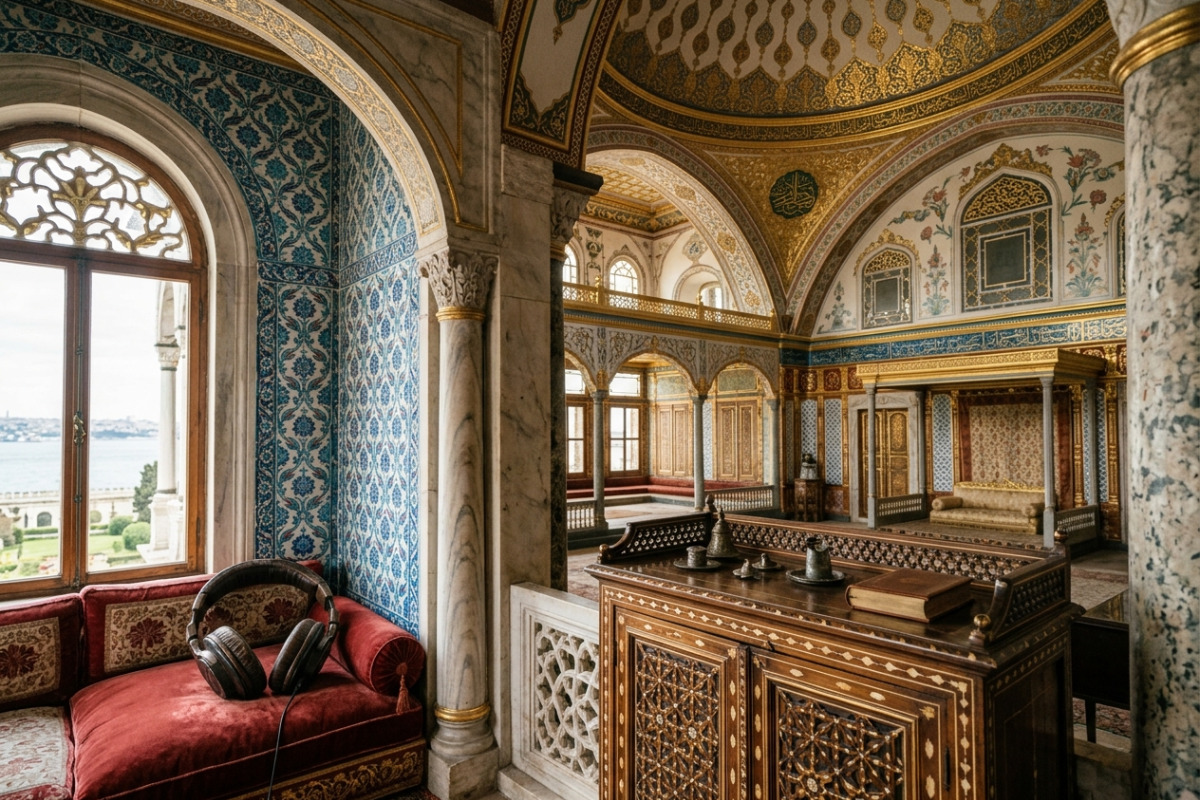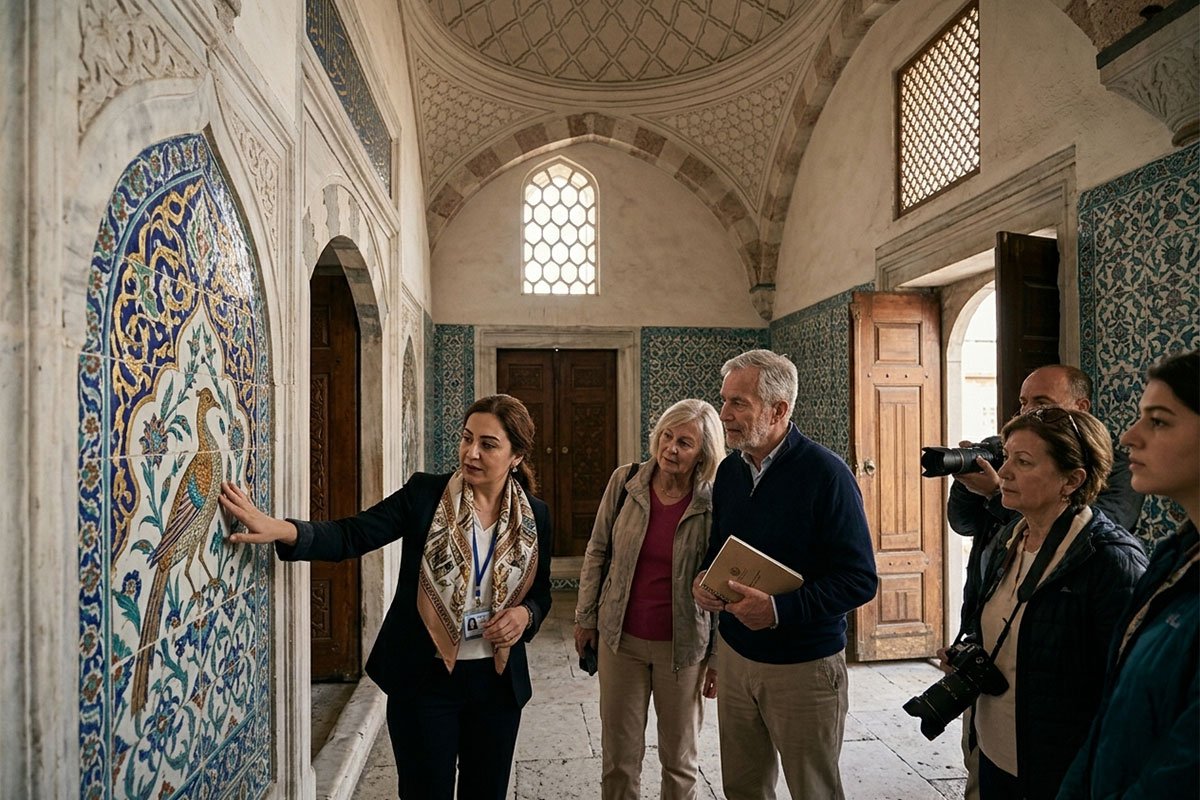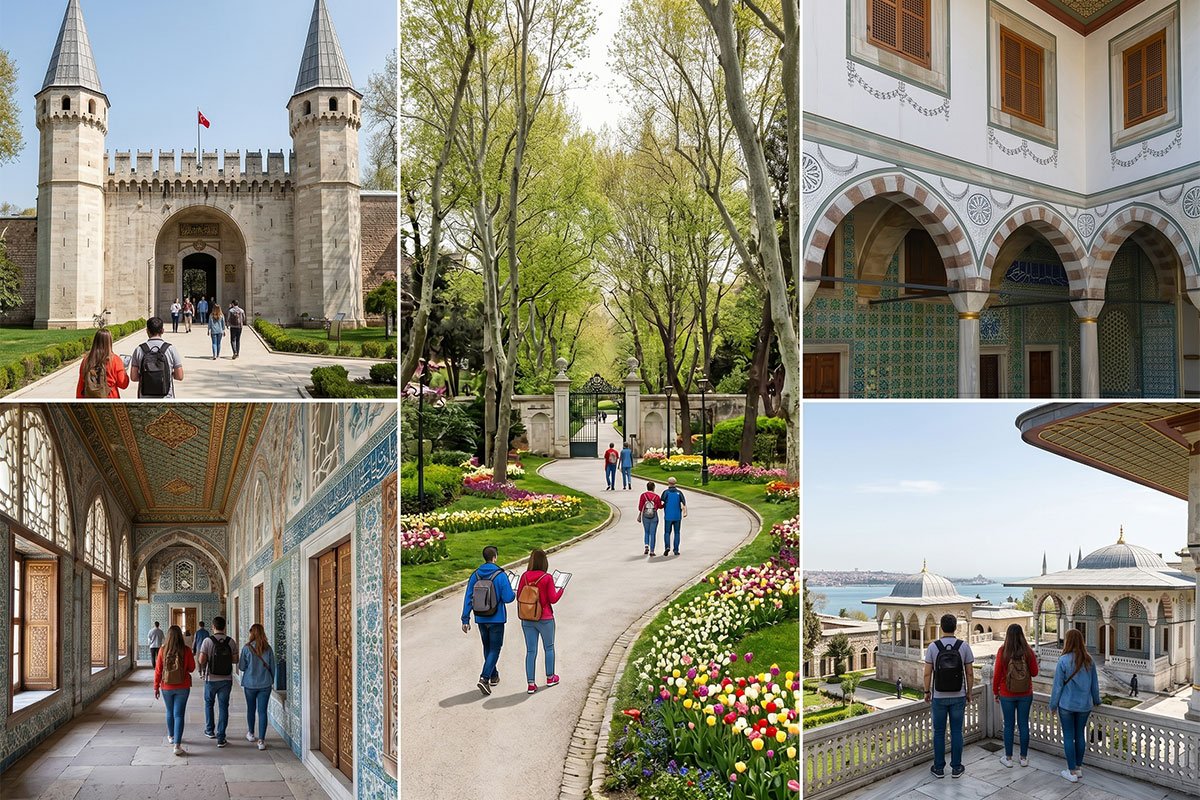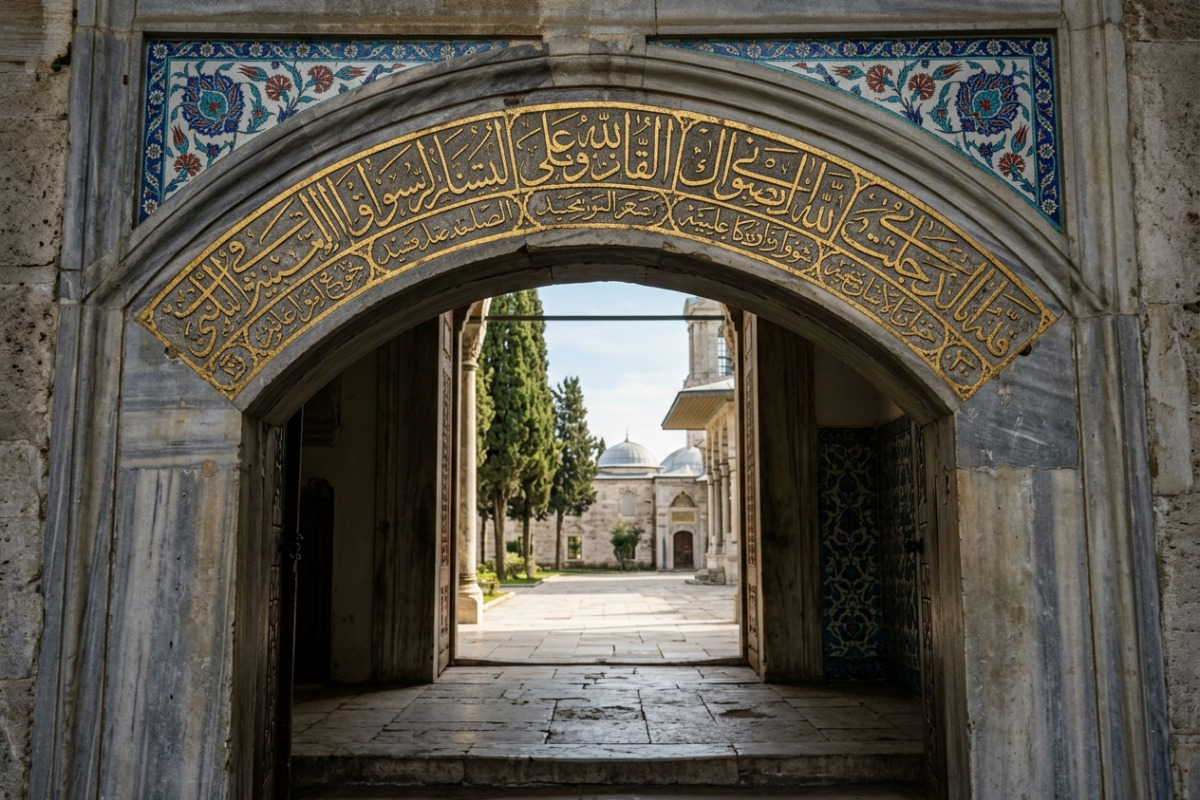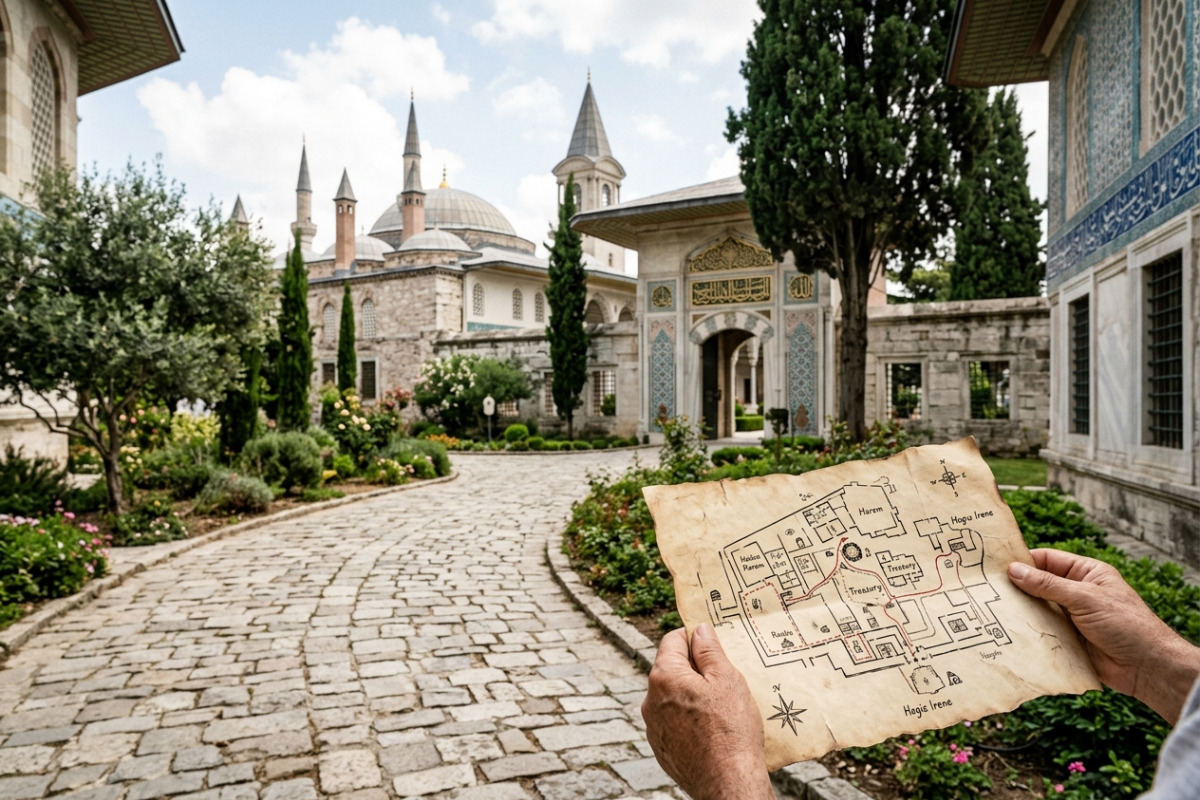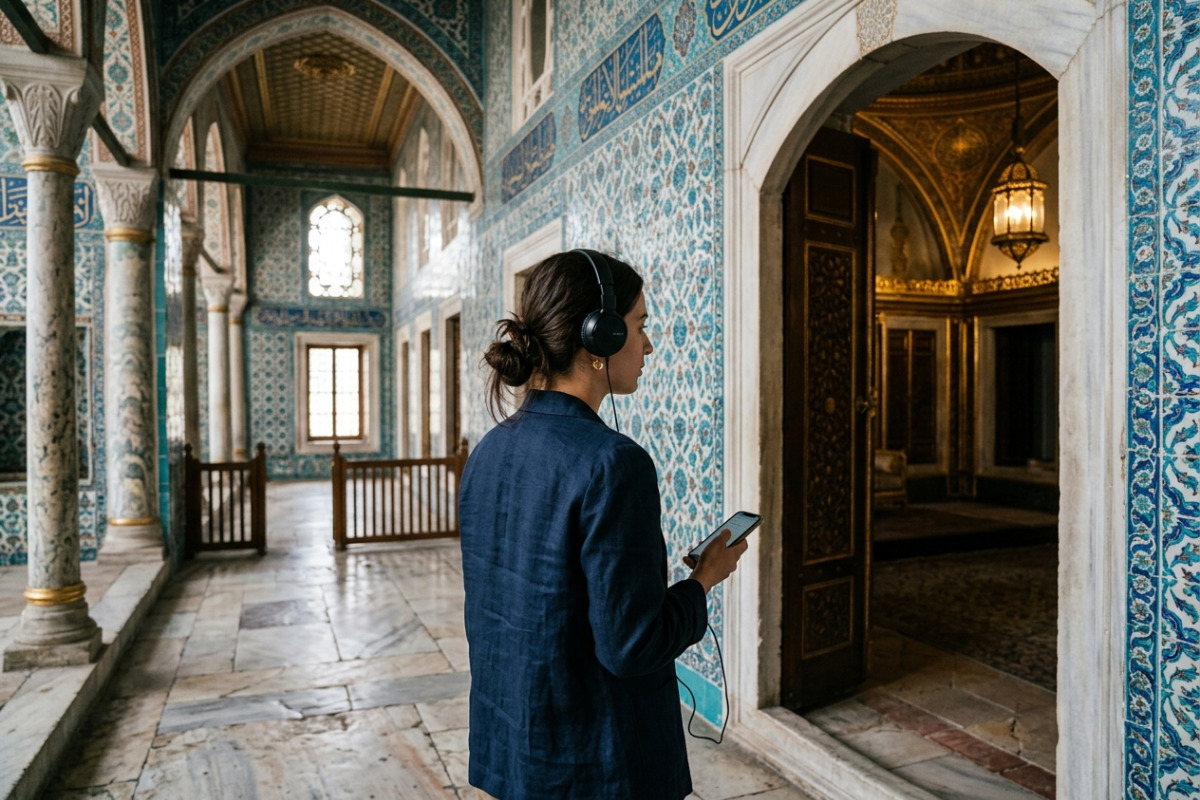
You can turn a standard museum visit into a vivid memory by curating a Topkapi Palace audio experience that complements what you see. This guide shows how to prepare audio playlists, pair soundscapes with specific rooms, and build a short scavenger-style route so your visit feels both focused and discovery-driven. The focus keyword "Topkapi Palace audio experience" appears early because it encapsulates the practical goal: listening with intention to enrich your time at the palace.
Why an audio-first approach transforms your Topkapi Palace audio experience
An audio-focused visit multiplies the ways you remember a place. When you combine narration, ambient sound, period music, and short listening prompts, you create multi-sensory anchors that link visual details to emotions and facts. That means a tile pattern, a worn stair, or a jeweled case becomes easier to recall after the visit.
Audio also frees you from constant reading and charting. Instead of stopping at every plaque, you follow a curated listening flow that keeps you moving at the pace you choose. This works particularly well at Topkapi, where courtyards and compact chambers reward a rhythm of attentive listening and visual exploration.
Preparing your kit and tracks before arrival
Start with practicalities: choose comfortable in-ear or on-ear headphones and test them with your phone's battery life in mind. Download any necessary files for offline use—especially if you prefer curated soundscapes you made in advance. If you plan to use the official audio guide, download its offline files and note the track numbers for the sections you want to linger on. For technical requirements and device compatibility, you can check the FAQ section.
Keep a simple folder on your device: 1) brief contextual narration for big highlights, 2) short ambient loops (30–90 seconds) to play while you look, and 3) a couple of musical interludes for courtyard pauses. Save everything at medium bitrate so files load quickly and use little storage.
Match audio styles to palace sections
Different areas of Topkapi call for different audio treatments. For example, the Treasury benefits from measured narration and the occasional silence to let the jewels speak visually. The Harem rewards short first-person reflections or dramatized readings that suggest daily life without sensationalizing. Use gentle, non-distracting music in the Gardens—ambient nature sounds can deepen the sense of place.
When you enter spaces like the Divan or the Kitchen, consider switching to focused audio prompts: one-minute tracks that ask a question or point out a detail to look for. These short cues help you notice textures, inscriptions, or layout choices you might otherwise miss.
Sample audio pairings (quick reference)
- Treasury: Calm narration + 30s silence breaks
- Harem: Character-driven vignettes (45–60s)
- Gardens: Ambient nature loops with descriptive captions
- Kitchen: Rhythmic sounds + practical fact snippets
Step-by-step: Build a 60–90 minute sensory route
Follow these steps to assemble a compact listening route that highlights depth over breadth. This method makes the most of limited time while still delivering richer insights than a passive walk-through.
- Choose three focus points (for example: a courtyard, a chamber, a collection). Keep them close enough to limit walking time between stops.
- Assign an audio style to each point—narration, vignette, ambient, or prompt. Aim for tracks of 45–90 seconds each.
- Create listening transitions: 15–30 second musical or ambient bridges to reset attention while you move between spots.
- Test the route quickly on your phone before entering the palace, then adjust timings once you’re inside.
Example 75-minute route: Courtyard ambient (10 min of looking + 60s audio), Harem vignette (20 minutes + two 60s tracks), Treasury focused prompts (20 minutes + three short tracks), Gardens pause (10 minutes of ambient music). This schema keeps you present without overloading you with facts.
Practical listening etiquette and accessibility tips
Respectful listening matters in a busy museum. Keep volume at a level where you can still hear announcements and other visitors if necessary. Use single-ear listening when you want to remain aware of your surroundings. If you visit in a group, share a single device or take turns so you don't crowd passageways.
For accessibility, provide captions or transcripts on your device so hard-of-hearing visitors can follow along. If you have mobility constraints, plan a route that minimizes backtracking and prioritize nearby highlights—details are available on the site's Visiting Information page.
Putting it into practice: day-of checklist and booking
On the day, arrive with your playlists downloaded, headphones charged, and a short printed or digital route map. If you prefer official materials, the audio guide pairs well with homemade soundscapes: use the official tracks for orientation and your extras for depth. Remember to secure your entry in advance—book Tickets early to avoid sold-out time slots, and keep in mind that the Harem requires a separate admission which can be found in the ticket options.
Finally, keep notes as you go: one-line reactions tied to a room help you refine future routes and build a personal archive of memories. Over time, you'll have a set of go-to audio pairings for different moods—quiet reflection, family visits, or deeper study.
Conclusion: Try a personalized Topkapi Palace audio experience today
A well-curated audio approach turns observation into a layered encounter that lingers after you leave. By planning tracks for specific spaces, using respectful listening practices, and booking your tickets in advance, you transform a visit into an intentional sensory journey. Start with one short route on your next visit and iterate—each time you listen, you’ll notice more.
"Listen with a purpose: a well-chosen sound can reveal details your eyes alone might miss."