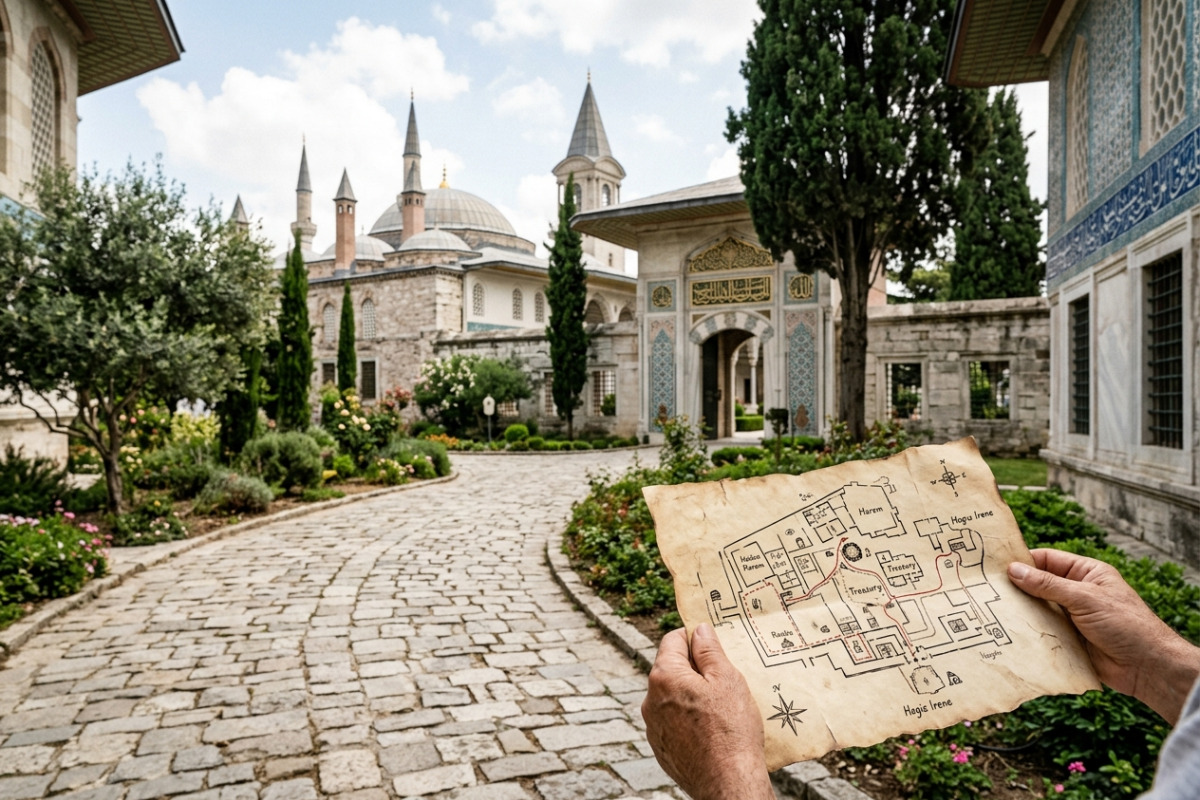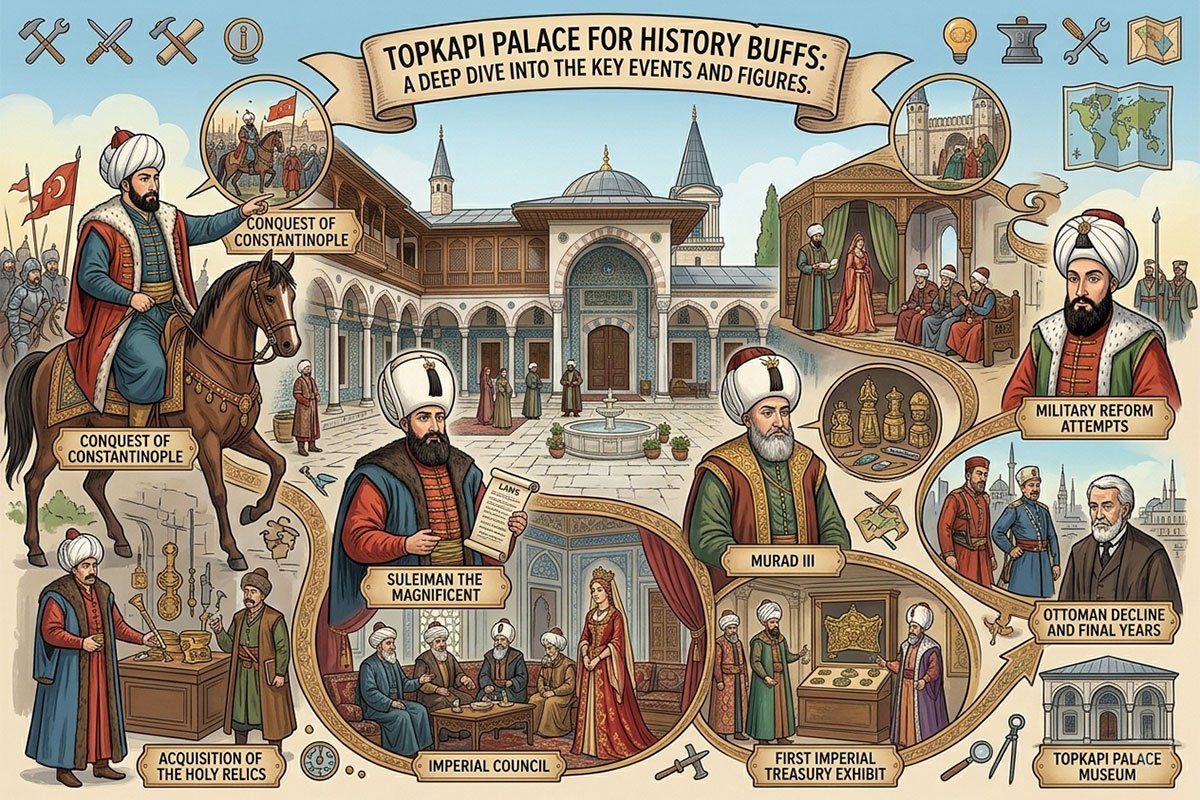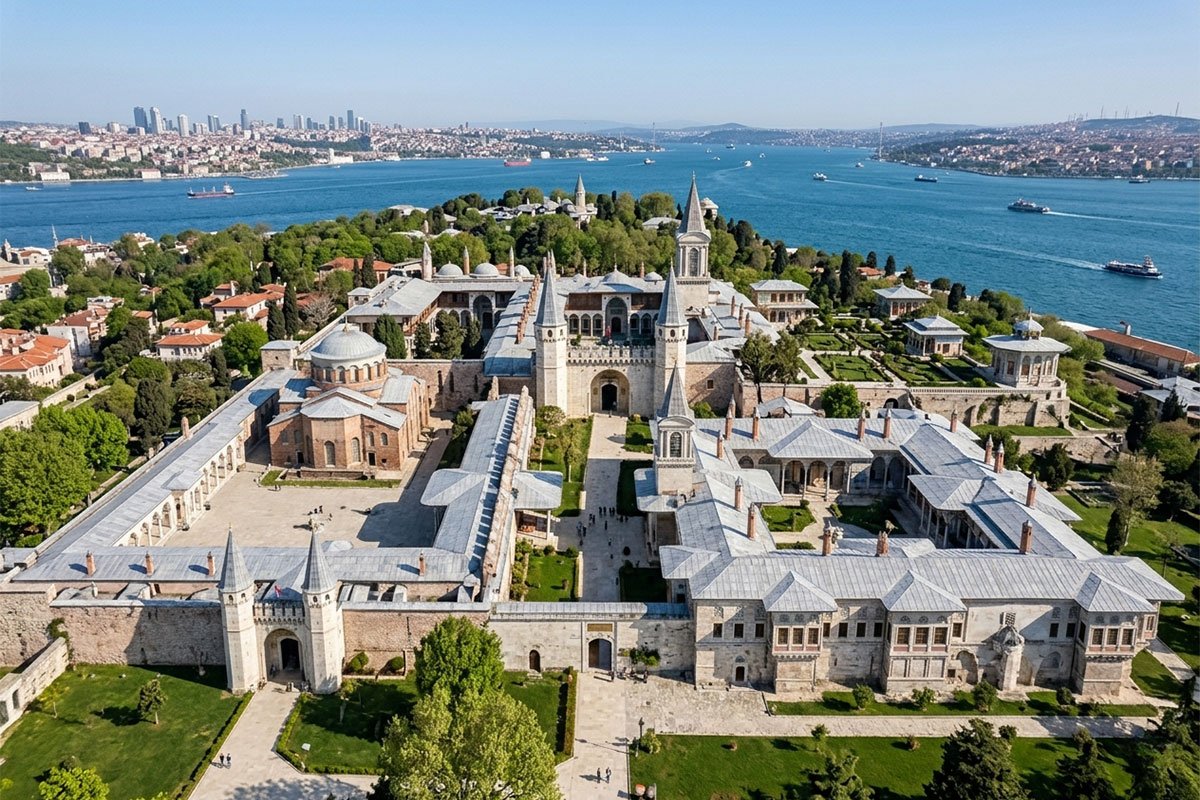
Topkapi Palace, the heart of the Ottoman Empire for nearly four centuries, is a sprawling complex of buildings, courtyards, and gardens that can feel overwhelming to navigate. Its rich history, spanning from the conquest of Constantinople in 1453 until the mid-19th century, is etched into its intricate architecture. For many visitors, the sheer scale of the site leads to a sense of being lost amidst the grandeur. This guide aims to simplify your visit by explaining the function of each of the four main courtyards, providing a clear understanding of the palace layout and its historical significance. Rather than just struggling with a map, understanding the 'why' behind the design will allow you to walk through history with a deeper perspective.
Understanding the Palace Hierarchy: The Philosophy of Space
The layout of Topkapi Palace was not accidental; it was designed with a rigid hierarchy in mind, reflecting the absolute power and evolving privacy of the Sultan. This concept is often referred to as the 'Palace of Happiness' (Saray-ı Hümayun). As you move from the first courtyard toward the fourth, the atmosphere changes. The spaces become smaller, more ornate, and significantly more exclusive. This progression represents the transition from the public face of the empire to the most intimate domestic life of the Ottoman dynasty. Understanding this hierarchical structure is key to appreciating the flow and function of Topkapi Palace, moving from the noise of the city to the silence of the Sultan’s private gardens.
The First Courtyard: Alay Meydanı (The Parade Ground) - Public Access
The First Courtyard, also known as the Parade Ground or Outer Courtyard, was the most public area of Topkapi Palace. Unlike the inner sections, this area was accessible to almost everyone, including merchants, farmers, and foreign dignitaries awaiting their appointments. It served as a massive buffer zone between the city of Istanbul and the administrative heart of the empire. This courtyard was a space for official ceremonies, military parades, and public announcements.
You enter this space through the Imperial Gate (Bab-ı Hümayun), a magnificent structure located near Hagia Sophia. In the Ottoman era, the First Courtyard was a bustling hub of activity. It housed essential service buildings that kept the palace running, such as the imperial mint, wood storage, and bakeries. It was also the site where petitions could be submitted to the Sultan's officials. Interestingly, this is the only courtyard where visitors could enter on horseback—though only the Sultan was permitted to remain mounted beyond the next gate.
Key features of the First Courtyard include:
- The Imperial Gate (Bab-ı Hümayun): The massive main entrance featuring calligraphic inscriptions praising the Sultan.
- Hagia Irene (Aya İrini): A Byzantine church dating back to the 4th and 6th centuries. Uniquely, it was never converted into a mosque but was used as an armory and warehouse by the Janissaries.
- The Imperial Mint (Darphane-i Âmire): Where the gold and silver coins of the empire were produced for centuries.
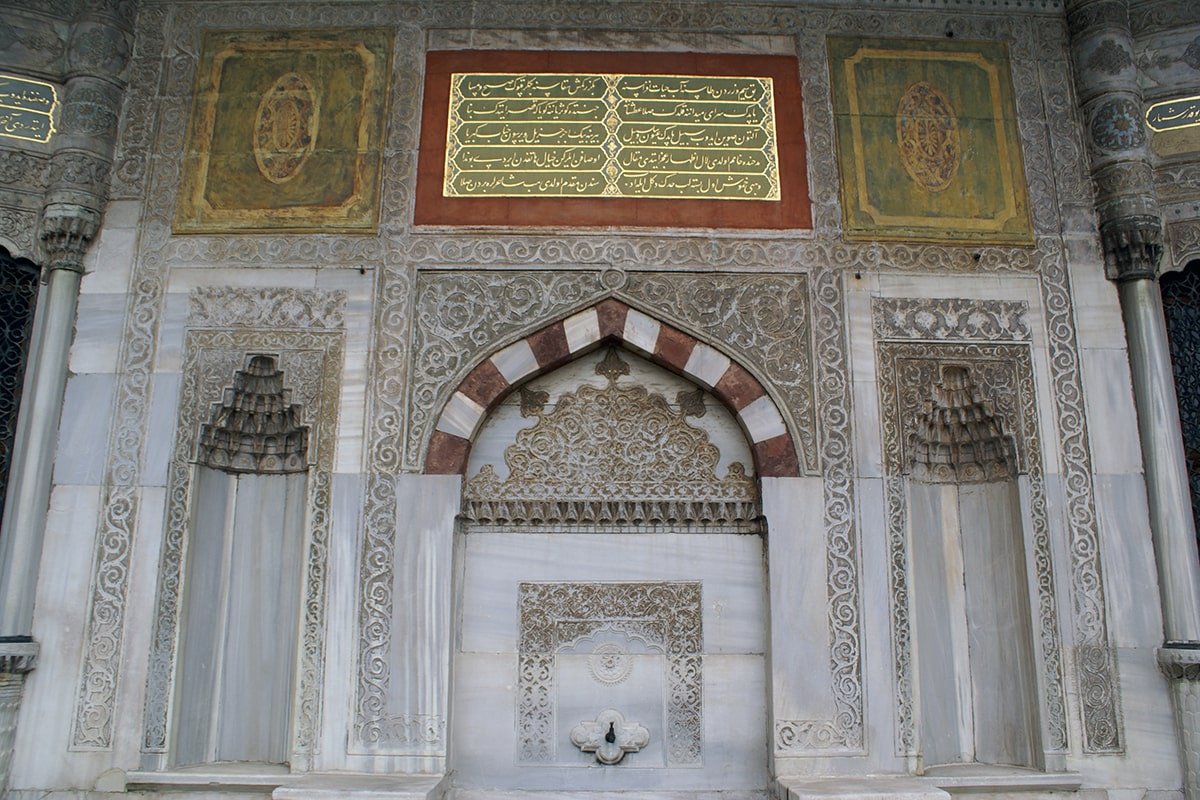
- The Fountain of the Executioner: A somber reminder of the palace's absolute power, located near the entrance to the second courtyard.
The Second Courtyard: Divan Meydanı (The Square of the Divan) - State Affairs
Passing through the Gate of Salutation (Bab-üs Selam), you enter the Second Courtyard, or the Square of the Divan. This was the administrative and judicial center of the Ottoman Empire. Access here was strictly controlled; only high-ranking officials, ambassadors, and members of the court were permitted. The atmosphere here was famously silent; even the Janissaries were expected to maintain a hushed reverence as a sign of respect for the Sultan's authority.
The most vital building here is the Divan-ı Hümayun (Imperial Council). This is where the Grand Vizier and other ministers met to discuss matters of state, law, and war. The Sultan would often observe these meetings from a hidden window behind a golden grille, ensuring his presence was felt even when he wasn't physically in the room. To the left of the Divan stands the Tower of Justice, the tallest structure in the palace, which allowed the Sultan to overlook the entire city and symbolized his watchful eye over his subjects. Opposite the administrative buildings are the massive Palace Kitchens, which once employed over a thousand staff to feed the palace residents.
Key features of the Second Courtyard include:
- The Gate of Salutation (Bab-üs Selam): Featuring two distinct conical towers, this gate served as the checkpoint for the inner palace.
- The Imperial Council (Divan-ı Hümayun): The room where the empire's fate was decided.
- The Tower of Justice: A landmark that symbolizes the Sultan’s commitment to fair rule.
- The Palace Kitchens and Porcelain Collection: Today, these house one of the world's finest collections of Chinese and Japanese porcelain.
- The Weapons Gallery: Located in the former treasury, displaying the evolution of Ottoman military technology.
The Third Courtyard: Enderun Avlusu (The Inner Palace) - The Private Realm
The Third Courtyard, or the Enderun, marks the transition into the Sultan’s private residence. Entry was granted only through the Gate of Felicity (Bab-üs Saadet). This gate was the site of the most important ceremonies, such as the Sultan's enthronement and the handing over of the sacred standard before military campaigns. Beyond this gate, the world of the Sultan began, and unauthorized entry was once punishable by death.
This courtyard housed the School of Pages (Enderun Mektebi), an elite institution where the most promising young men from across the empire were trained for high-ranking positions. The Third Courtyard is also home to the Chamber of the Sacred Relics, which contains artifacts of immense religious significance, including the mantle and sword of the Prophet Muhammad. The architecture here becomes more intimate, featuring beautiful gardens and the stunning Library of Ahmed III, a masterpiece of 18th-century Ottoman design located right at the center of the courtyard.
Key features of the Third Courtyard include:
- The Gate of Felicity (Bab-üs Saadet): The threshold to the Sultan's private world, guarded by the Chief White Eunuch.
- The Audience Chamber (Arz Odası): Where the Sultan received the Grand Vizier and foreign ambassadors in private.
- The Sacred Safekeeping Rooms: Housing the most important Islamic relics in the world.
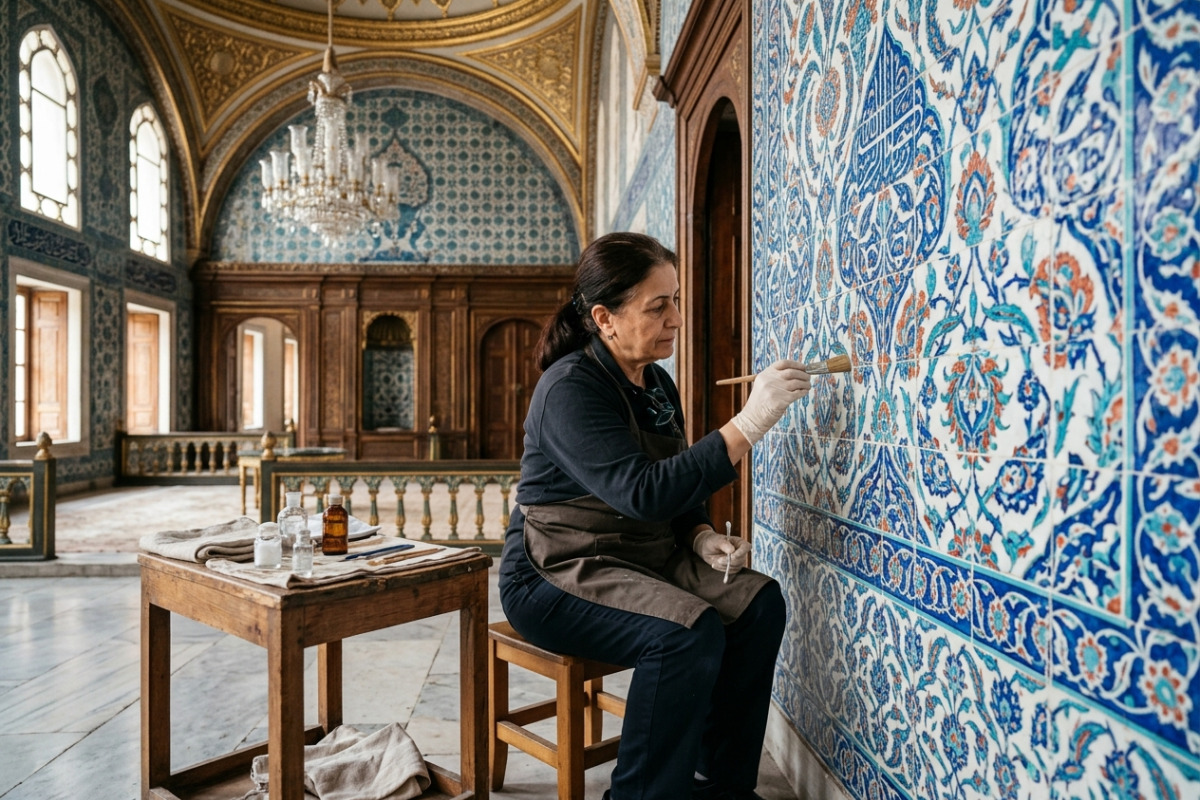
- The Library of Ahmed III: An elegant building designed for study and reflection, featuring exquisite Iznik tiles.
- The Treasury: Home to the famous Spoonmaker’s Diamond and the Topkapi Dagger.
The Fourth Courtyard: Sofa-i Hümayun (The Imperial Terrace) - Leisure and Gardens
The Fourth Courtyard is not a traditional enclosed square but rather a series of terraces and gardens overlooking the Bosphorus and the Golden Horn. This was the Sultan’s sanctuary—a place for leisure, entertainment, and quiet contemplation. The architecture here is characterized by delicate kiosks and pavilions that represent the pinnacle of Ottoman aesthetic refinement.
The Fourth Courtyard offers the most breathtaking views in Istanbul. Here, you can see the Baghdad Kiosk and the Revan Kiosk, built to commemorate military victories. The Iftariye Baldachin, a small gilded structure with a ridged roof, was where the Sultan would break his fast during Ramadan while watching the sunset over the city. This area beautifully illustrates the softer side of the Ottoman dynasty, focusing on art, nature, and the enjoyment of the empire's natural beauty.
Key features of the Fourth Courtyard include:
- The Baghdad Kiosk: Famous for its blue-and-white tile work and domed ceiling.
- The Revan Kiosk: A stunning example of classical Ottoman pavilion architecture.
- The Circumcision Room (Sünnet Odası): An exquisitely tiled summer kiosk used for royal ceremonies.
- The Iftariye Baldachin: The iconic golden-roofed structure offering panoramic views of the Golden Horn.
- The Grand Kiosk (Mecidiye Köşkü): A 19th-century addition showing the influence of European architectural styles.
Topkapi Palace Courtyards: A Quick Reference Table
To help you keep the layout straight during your visit, refer to this summary of the four distinct zones:
| Courtyard | Historical Name | Primary Function | Access Level | Key Highlights |
| First Courtyard | Alay Meydanı | Public ceremonies & services | Open to the public | Imperial Gate, Hagia Irene |
| Second Courtyard | Divan Meydanı | State administration & justice | Officials & Dignitaries | Imperial Council, Tower of Justice |
| Third Courtyard | Enderun Avlusu | Sultan’s residence & education | Private (Sultan & Inner Court) | Sacred Relics, Library of Ahmed III |
| Fourth Courtyard | Sofa-i Hümayun | Leisure, gardens & pavilions | Sultan’s private sanctuary | Baghdad Kiosk, Iftariye Baldachin |
Tips for Navigating the Topkapi Palace Layout
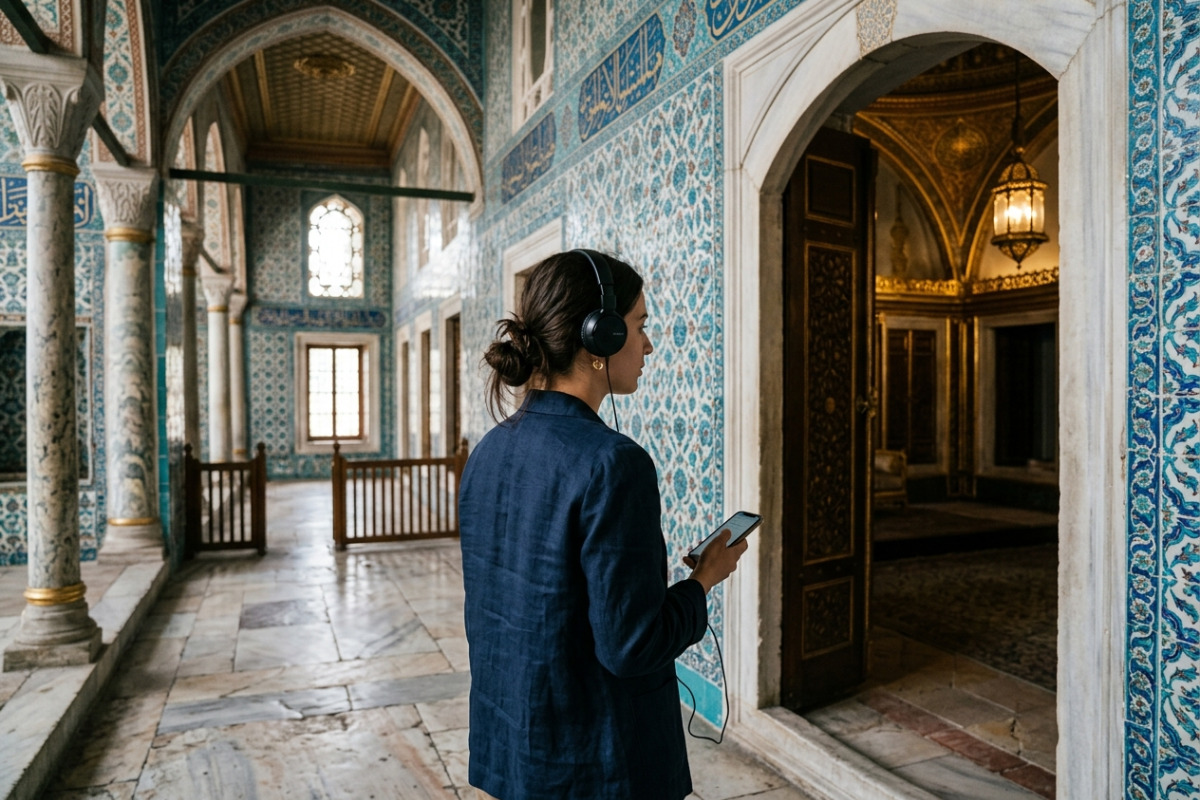
When planning your visit, remember that Topkapi Palace is not just a building but a complex. To truly appreciate the 'Four Courtyards' experience, we recommend starting early in the morning. Begin at the First Courtyard and move inward, but keep in mind that the Harem (which requires a separate ticket) is accessed from the Second Courtyard. While the Harem is not one of the four main 'public' courtyards, it is an essential part of the palace's domestic history.
Wear comfortable walking shoes, as the stones of the courtyards can be uneven. By understanding the function of each section—from the public parade ground to the private imperial terrace—you can navigate Topkapi Palace with confidence. You are not just walking through a museum; you are following the same path of power and privacy that the Sultans took for hundreds of years. Enjoy your journey through the heart of the Ottoman world!