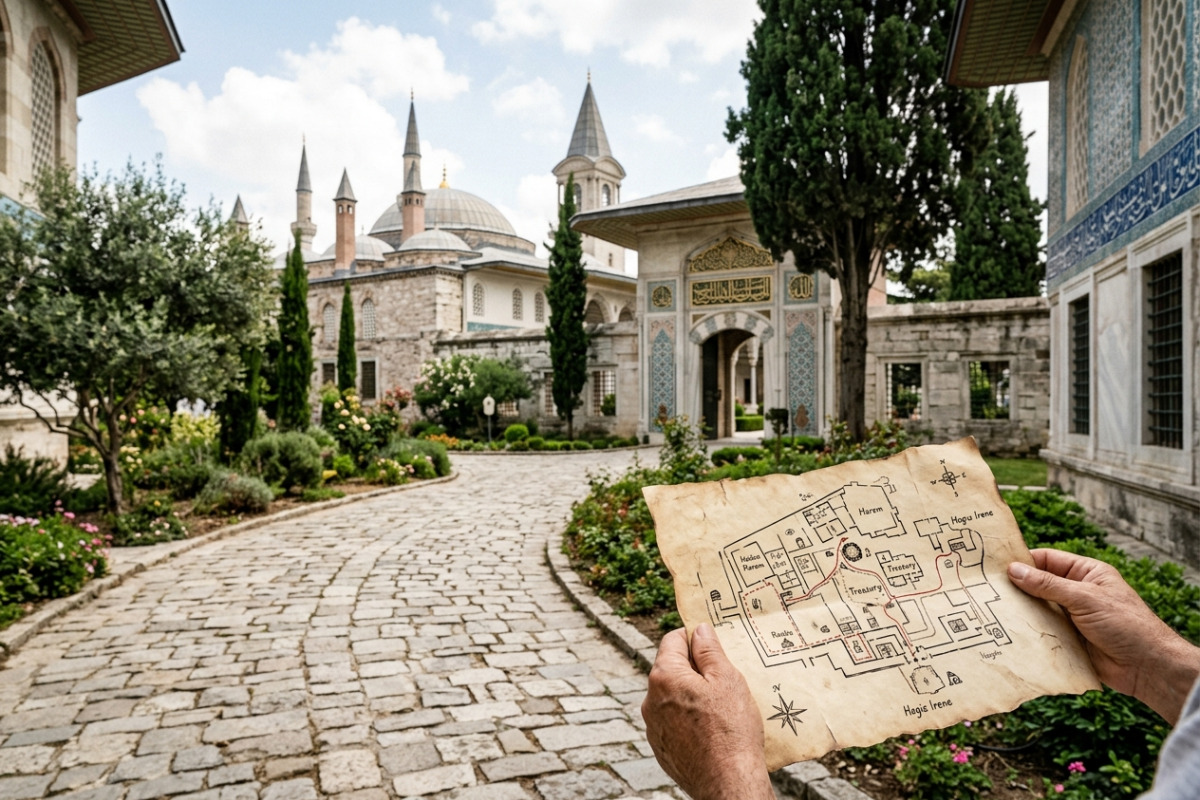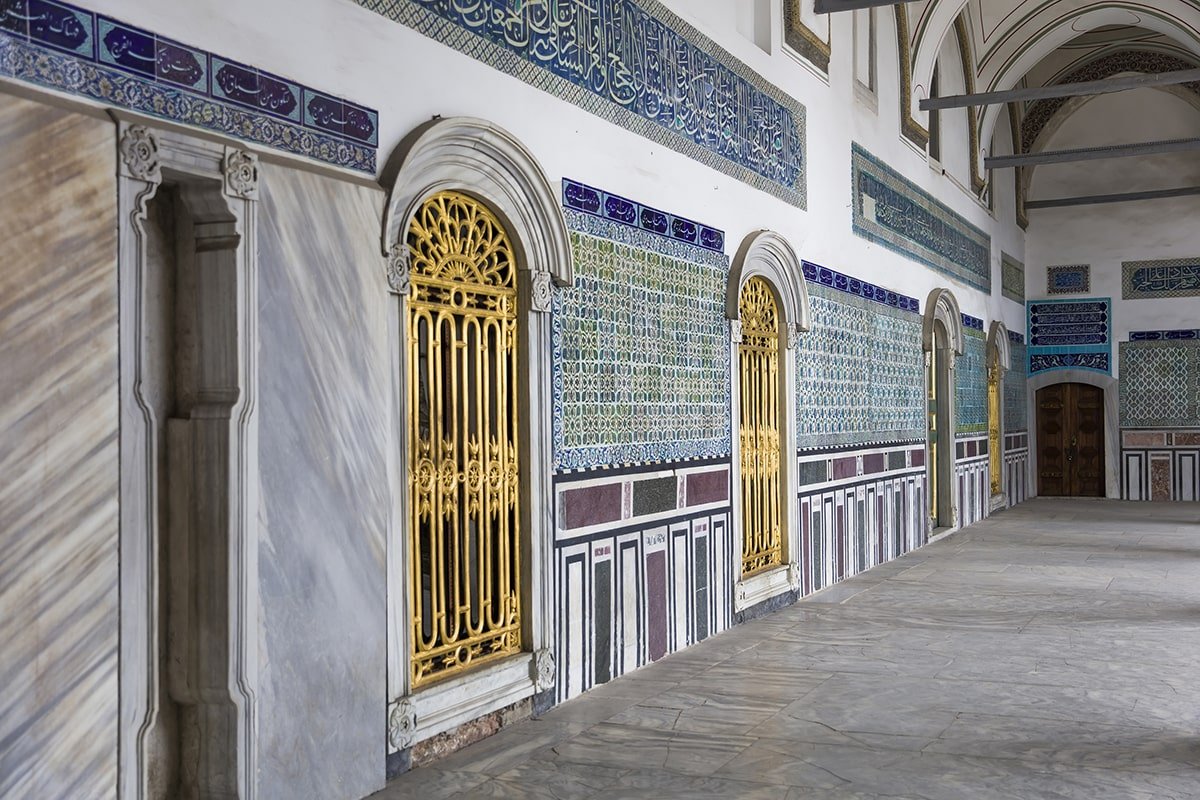
Topkapi Palace, the heart of the Ottoman Empire for nearly four centuries, is a sprawling complex that served as both a royal residence and the seat of government. While most visitors are drawn to the glittering Imperial Treasury and the sprawling courtyards, the true essence of the palace lies in its lesser-known corners. Beyond the standard tourist path exist hidden rooms, secret passages, and architectural marvels that offer a more intimate look at the lives of Sultans, courtiers, and the silent witnesses to imperial history. To understand Topkapi is to look beyond the gold and marble, into the shadows of its more secluded chambers.
The Wardrobe Chamber (Seferli Koğuşu)
Located in the Third Courtyard, the Wardrobe Chamber, or the Chamber of the Campaigners, is often overlooked by those rushing toward the Sacred Relics. Originally built during the reign of Murad IV in the 17th century, this structure was intended for the pages who served the Sultan during military campaigns. However, its historical significance evolved significantly over time. Today, it stands as a testament to the Ottoman obsession with ceremonial attire and textiles.
The interior of the Wardrobe Chamber reveals a sophisticated architectural layout that once housed the imperial laundry and the Sultan’s personal wardrobe. The room’s vaulted ceilings and thick stone walls were designed to protect the priceless kaftans and silk robes from humidity and light. Exploring this space allows visitors to appreciate the logistical complexity of the Ottoman court, where even the maintenance of the Sultan’s clothing was a highly organized and secretive affair involving hundreds of specialized servants.
The Secret Subterranean Cisterns
One of the most profound secrets of Topkapi Palace lies beneath the feet of the visitors. Built upon the ruins of the Byzantine acropolis, the palace utilizes a complex network of ancient cisterns and water systems. While the Basilica Cistern in Sultanahmet is world-famous, the private cisterns within the palace grounds remain largely hidden from view. These underground reservoirs were vital for the palace’s survival, providing water for the lush gardens, the imperial kitchens, and the numerous hammams.
These subterranean chambers feature brick-vaulted arches and columns repurposed from Roman-era structures. They were strategically placed to ensure that the palace remained self-sufficient during times of siege. Some of these water channels are rumored to connect various parts of the palace through narrow, damp tunnels, providing a literal and metaphorical layer of mystery to the site’s topography. Though mostly closed to the general public, their presence is felt in the cooling breezes that rise from the palace’s lower foundations.
The Fruit Room of Ahmed III (Yemiş Odası)
Tucked away within the Harem complex is one of the most visually stunning yet frequently bypassed rooms: the Fruit Room (Yemiş Odası). Built in 1705 for Sultan Ahmed III, this small chamber represents a radical departure from the traditional tile-heavy decor found elsewhere in the palace. Instead of the typical blue and white Iznik tiles, the walls are adorned with intricate wooden panels painted with vibrant depictions of flowers, vases, and bowls of fruit.
This room served as a private dining or resting area for the Sultan. The use of 'Edirnekari' (a traditional Turkish lacquer technique) creates a warm, almost whimsical atmosphere that contrasts sharply with the austere political halls of the Second Courtyard. The Fruit Room offers a rare glimpse into the 'Tulip Period' of the Ottoman Empire, a time when the court began to embrace more naturalistic and Western-influenced aesthetics. It remains a hidden gem of interior design, showcasing the Sultan’s personal taste for beauty and tranquility away from the prying eyes of the court.
The Twin Kiosks and the 'Kafes' Architecture
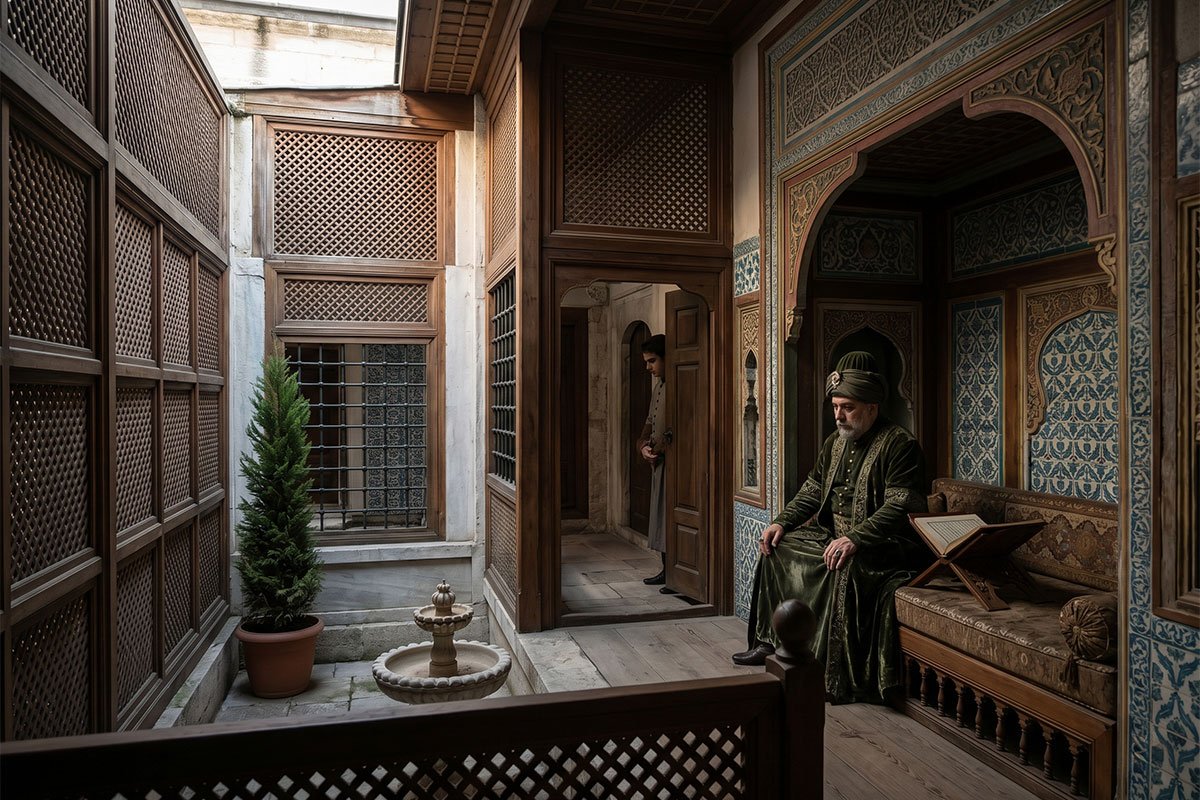
While the concept of the 'Kafes' (the Cage) is often discussed in historical texts regarding the confinement of Ottoman princes, the architectural reality of the Twin Kiosks (Çifte Kasırlar) is rarely analyzed in detail. These two rooms, located near the Harem, are masterpieces of 17th-century Ottoman architecture, featuring some of the finest stained glass and tile work in the entire complex.
The Twin Kiosks were designed to be both luxurious and isolated. The hidden nature of these rooms served a political purpose: keeping potential heirs to the throne under constant surveillance. The intricate geometric patterns on the ceilings and the low-seated divans suggest a life of quiet contemplation—or perhaps agonizing isolation. The windows, though beautiful, were positioned to limit the view of the outside world, reinforcing the 'hidden' life of those who resided within. These rooms provide a stark reminder of the psychological weight that accompanied the privilege of royal blood.
The Dormitory of the Halberdiers with Tresses (Zülüflü Baltacılar Koğuşu)
One of the most fascinating 'hidden' functional areas is the Dormitory of the Halberdiers with Tresses. This structure is unique because it is one of the few remaining examples of a wooden living quarter within the palace walls. The Halberdiers were an elite corps responsible for various tasks, including carrying the Sultan’s throne and cleaning the palace courtyards. Their name comes from the two locks of hair (tresses) that hung from their caps, which were intended to block their peripheral vision so they would not look at the women of the Harem.
The dormitory includes a mosque, a pipe-smoking room, and a traditional Turkish bath. The layout is remarkably well-preserved, offering a sense of the daily routines of the palace staff. Unlike the marble-clad imperial halls, this area is defined by dark wood and functional simplicity. It is a hidden world within a world, illustrating the strict social hierarchy that governed every aspect of life in Topkapi.
The Imperial Council’s Secret Window
In the Chamber of the Imperial Council (Divan-ı Hümayun), where the Grand Vizier and his ministers discussed matters of state, there is a small, grilled window high up on the wall. This is the 'Eye of the Sultan' (Kasr-ı Adl). From a hidden corridor behind this window, the Sultan could listen to the council’s deliberations without being seen. This secret architectural feature ensured that the ministers were always aware that they might be under the ruler’s direct observation.
This hidden vantage point perfectly encapsulates the Ottoman philosophy of power: the Sultan was an omnipresent but often invisible force. The corridor leading to this window is narrow and concealed, far removed from the public eye. It served as a vital tool for political intelligence, allowing the Sultan to gauge the honesty and effectiveness of his government without the pressure of a formal presence.
Conclusion: The Layers of Topkapi
Exploring Topkapi Palace is an exercise in peeling back layers of history. While the main tour covers the broad strokes of imperial grandeur, the hidden rooms—from the subterranean water systems to the private, painted chambers of the Sultans—provide the necessary detail to complete the picture. These spaces remind us that the palace was not just a monument, but a living, breathing organism with secret functions and private tragedies. For the visitor willing to look closer and seek out the specific architectural anomalies of the Wardrobe Chamber or the Halberdiers’ quarters, Topkapi reveals itself not just as a museum, but as a labyrinth of secrets that continue to fascinate centuries after the last Sultan departed.