Istanbul is a city where history breathes through its stones, and nowhere is this more evident than in its royal residences. For travelers, the dilemma often boils down to two iconic landmarks: Topkapi Palace and Dolmabahce Palace. While both served as the seat of the Ottoman Empire, they represent two entirely different eras, architectural philosophies, and atmospheres. If you are short on time and can only visit one, this comprehensive guide will break down everything you need to know to make the right choice.
Historical Background: Two Eras of an Empire
Topkapi Palace: The Heart of the Classical Ottoman Age
Built shortly after the conquest of Constantinople in 1453 by Sultan Mehmed the Conqueror, Topkapi Palace was the primary residence and administrative headquarters of the Ottoman Sultans for nearly 400 years. It is not just a palace but a sprawling complex that functioned like a city within a city. This was the stage for the empire’s golden age, where Suleiman the Magnificent ruled and where the legendary Harem intrigues took place. Walking through Topkapi is like stepping back into the 15th to 18th centuries, a time of tradition, conquest, and secretive court life.
Dolmabahce Palace: The Westernized Face of Modernity
By the mid-19th century, the Ottoman Empire sought to align itself more closely with European powers. In 1856, Sultan Abdülmecid I moved the imperial court from the "outdated" Topkapi to the newly built Dolmabahce Palace on the Bosphorus. Dolmabahce cost five million Ottoman gold liras—the equivalent of roughly 35 tons of gold—contributing significantly to the empire's financial decline. It served as the final residence of the Sultans and later became the home of Mustafa Kemal Atatürk, the founder of modern Turkey, who passed away there in 1938.
Architectural Style: Oriental Mystery vs. European Opulence
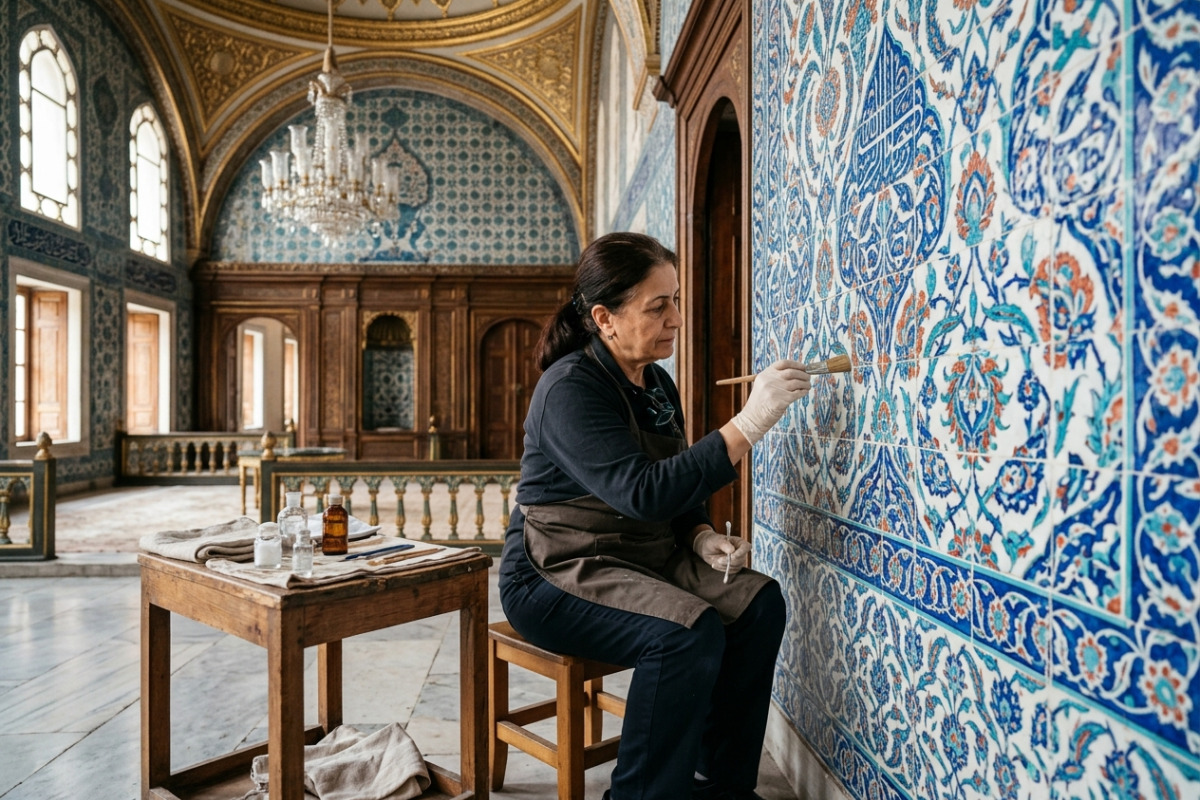
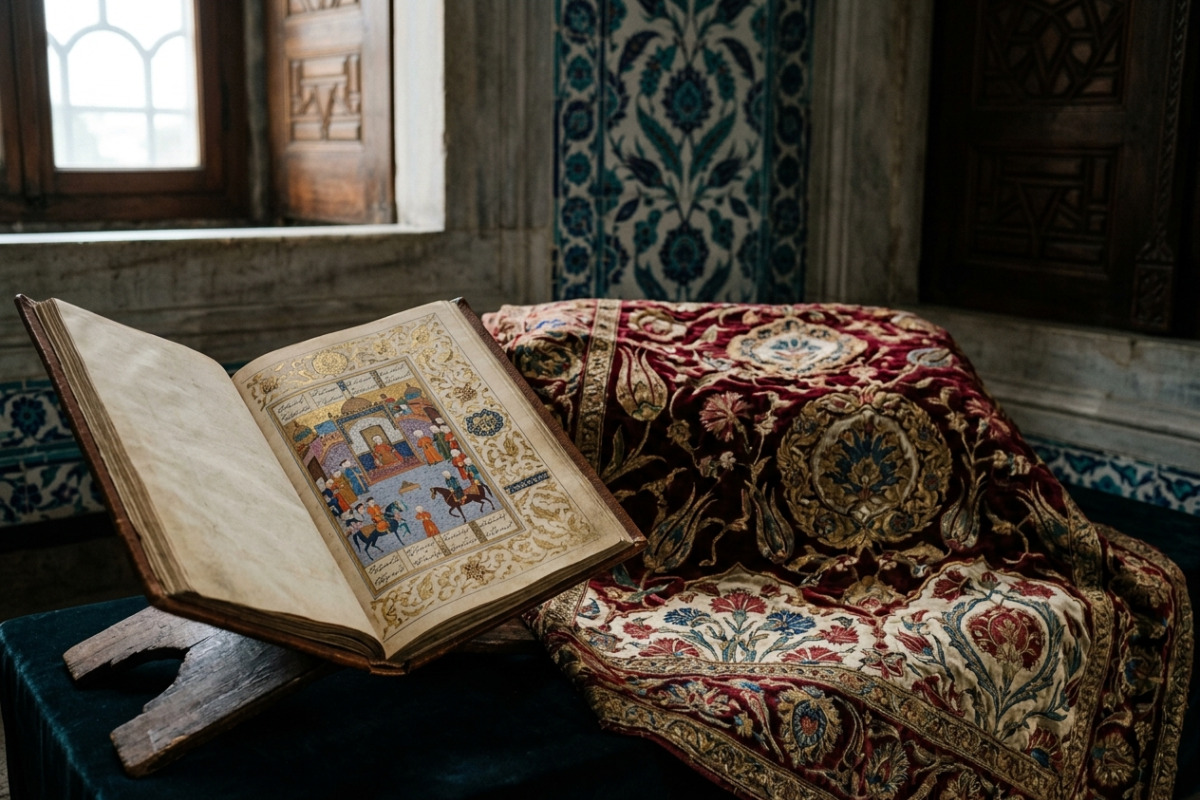
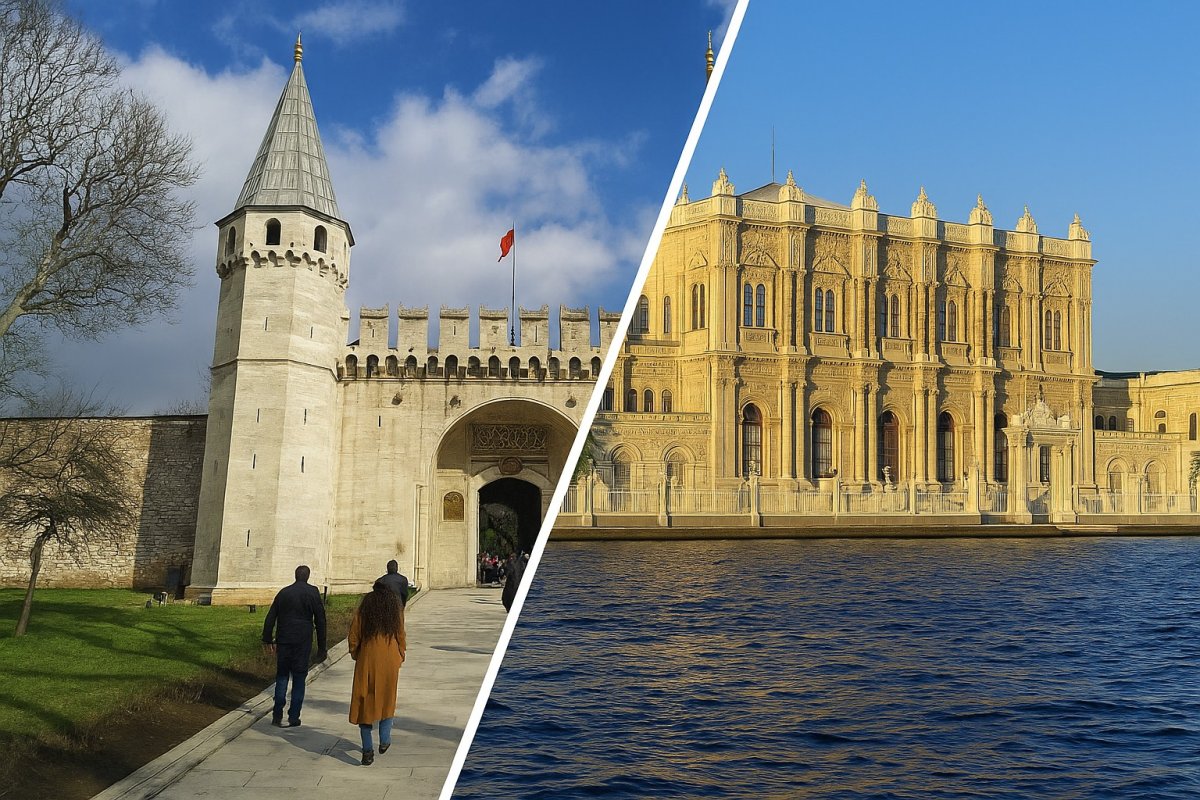
The contrast in architecture is perhaps the most striking difference between the two sites. Topkapi Palace follows a traditional Ottoman layout, consisting of four sequential courtyards, each more private than the last. The architecture is a blend of Islamic, Byzantine, and Ottoman styles, featuring low-rise pavilions, intricate Iznik tilework, and shaded porticos. It feels organic, mysterious, and deeply connected to Middle Eastern aesthetics.
In sharp contrast, Dolmabahce Palace is a monumental example of 19th-century grandeur. It was designed to rival the likes of Versailles or Buckingham Palace. Its facade and interiors are a lavish mix of Baroque, Rococo, and Neoclassical influences. You won’t find many Iznik tiles here; instead, you will see marble pillars, gold-leaf ceilings, and massive mirrors. It is the definition of "spectacle," designed to impress foreign dignitaries with the empire's supposed wealth and modernization.
What to See Inside: Highlights and Treasures
The Must-Sees at Topkapi
- The Harem: This is the most famous section of the palace. It was the private living quarters of the Sultan’s family, including his mother (Valide Sultan), wives, and concubines. The labyrinthine corridors and beautifully tiled rooms tell a story of power and seclusion.
- The Imperial Treasury: Home to the 86-carat Spoonmaker’s Diamond and the jewel-encrusted Topkapi Dagger. It is one of the most valuable collections of jewelry and precious metals in the world.
- The Sacred Relics: Located in the Privy Chamber, this section houses items of immense religious significance, including the mantle and sword of the Prophet Muhammad, and the staff of Moses.
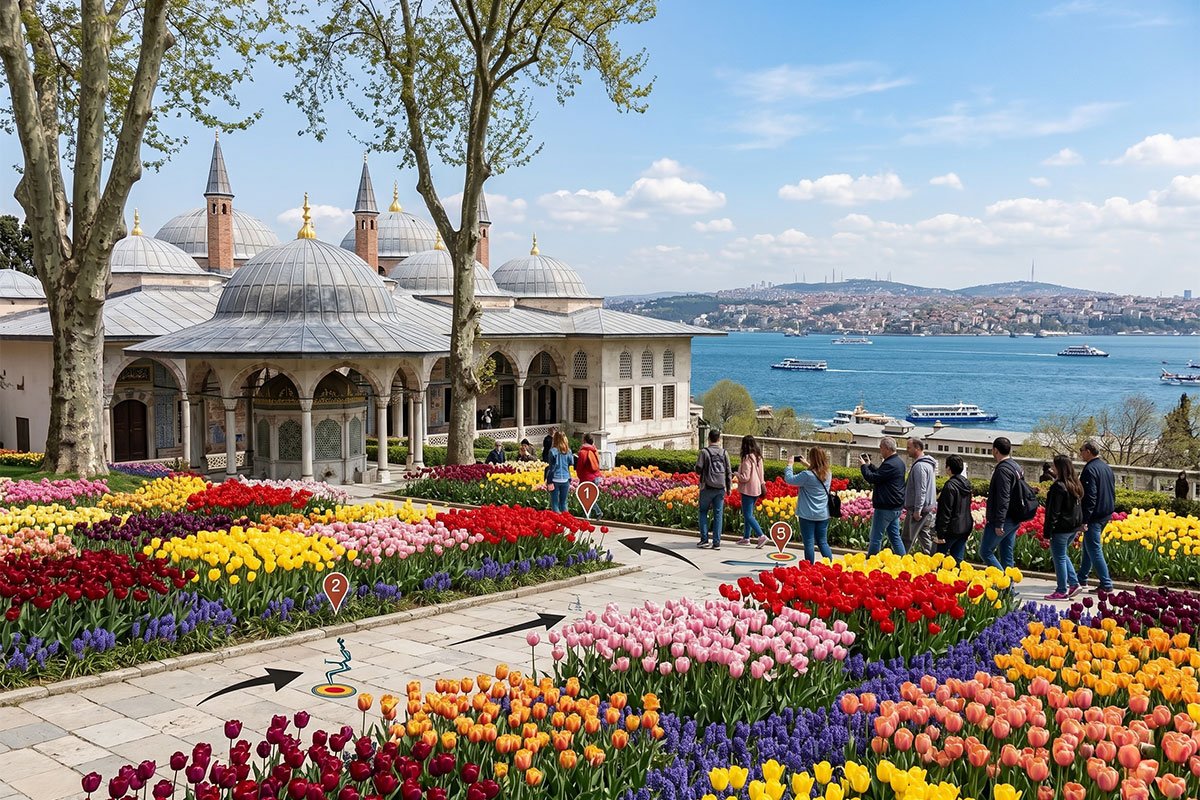
- The Fourth Courtyard: Offers breathtaking panoramic views of the Bosphorus, the Golden Horn, and the Sea of Marmara from the marble terraces.
The Must-Sees at Dolmabahce
- The Ceremonial Hall (Muayede Salonu): A massive hall featuring the world’s largest Bohemian crystal chandelier, a gift from Queen Victoria, weighing a staggering 4.5 tons.
- The Crystal Staircase: A double-horseshoe staircase made of Baccarat crystal, brass, and mahogany—a true masterpiece of 19th-century craftsmanship.
- Atatürk’s Bedroom: A more somber but historically significant room where Mustafa Kemal Atatürk spent his final days. The clocks in the palace are still set to 9:05 AM, the exact time of his passing.
- The Harem (Dolmabahce): While less "mysterious" than the one in Topkapi, it provides a fascinating look at how the royal family transitioned into a Westernized lifestyle.
The Tour Experience: Logistics and Vibe
The experience of visiting these two palaces differs significantly in terms of pace and rules. Topkapi Palace is largely an outdoor experience. You explore the courtyards at your own pace, and while there are indoor sections (like the Treasury and Harem), you spend a lot of time walking through gardens. It feels like a museum complex where you have the freedom to linger. Expect to spend at least 3 to 4 hours here.
Dolmabahce Palace is strictly an indoor, guided experience. You must follow a set path, and photography is technically prohibited inside most of the palace to protect the delicate interiors. It feels more like a grand royal mansion. The floors are covered with original Hereke carpets, and the atmosphere is one of preserved, hushed luxury. A visit here typically takes about 2 hours.
Current Pricing and Practical Information (2024/2025)
Pricing in Istanbul changes frequently due to inflation, but here are the current general ranges for foreign visitors:
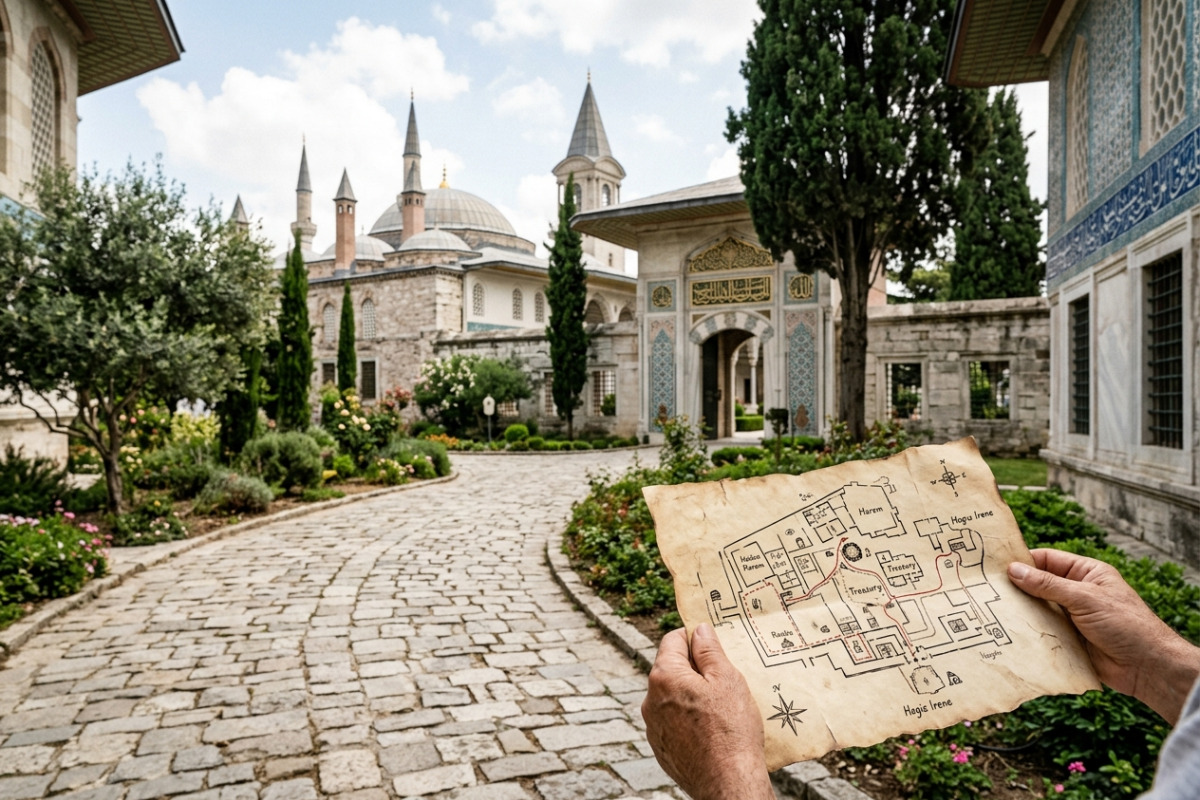
- Topkapi Palace: A combined ticket including the Palace, the Harem, and Hagia Irene Church costs approximately 1,500 TRY. The Museum Pass Istanbul covers Topkapi Palace and the Harem, making it a great value for those visiting multiple sites.
- Dolmabahce Palace: A combined ticket for the Selamlık (Main Palace), Harem, and the National Painting Museum costs approximately 1,050 TRY. It is important to note that Dolmabahce is NOT included in the standard Museum Pass Istanbul, as it is managed by the National Palaces Directorate rather than the Ministry of Culture.
Location: Topkapi is in the heart of the Old City (Sultanahmet), within walking distance of the Blue Mosque. Dolmabahce is located on the waterfront in Beşiktaş, easily accessible by tram (Kabataş station) or ferry.
Which One Should You Choose?
The choice ultimately depends on what kind of history and atmosphere you prefer.
- Choose Topkapi Palace if: You want to feel the "Old World" charm of the Orient. If you are fascinated by the classical Ottoman era, Islamic history, and the mysterious life of the Harem, Topkapi is unmissable. It is the more "Turkish" of the two palaces.
- Choose Dolmabahce Palace if: You love European-style opulence, grand ballrooms, and 19th-century history. If you want to see the transition of the Ottoman Empire into the modern world and witness the setting of Atatürk's final days, Dolmabahce is the better choice.
Final Verdict
If your schedule allows, we highly recommend visiting both. They represent the beginning and the end of one of history's greatest empires. However, if you must pick just one: Topkapi Palace is generally considered the more essential "Istanbul" experience for first-time visitors due to its unique architecture and the sheer volume of historical relics. But for those who crave elegance, sparkle, and Bosphorus views, Dolmabahce Palace never fails to dazzle.